For more than 150 years, aquaculture work has helped shape the waters and fishing traditions that define the Great Lakes.
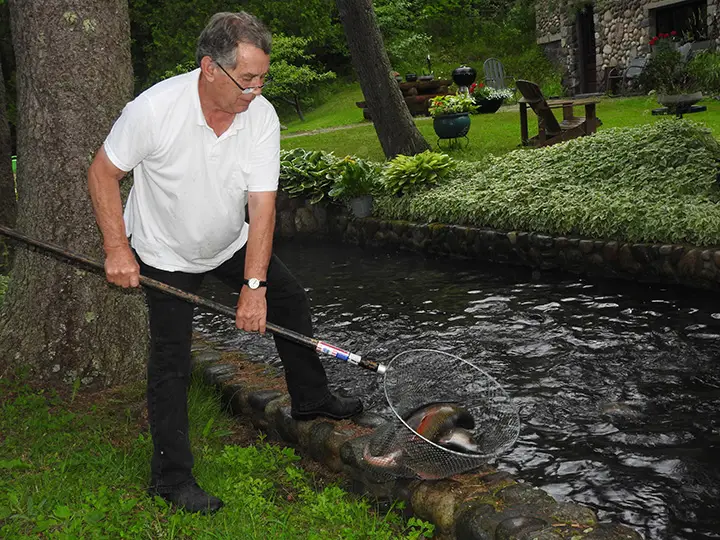
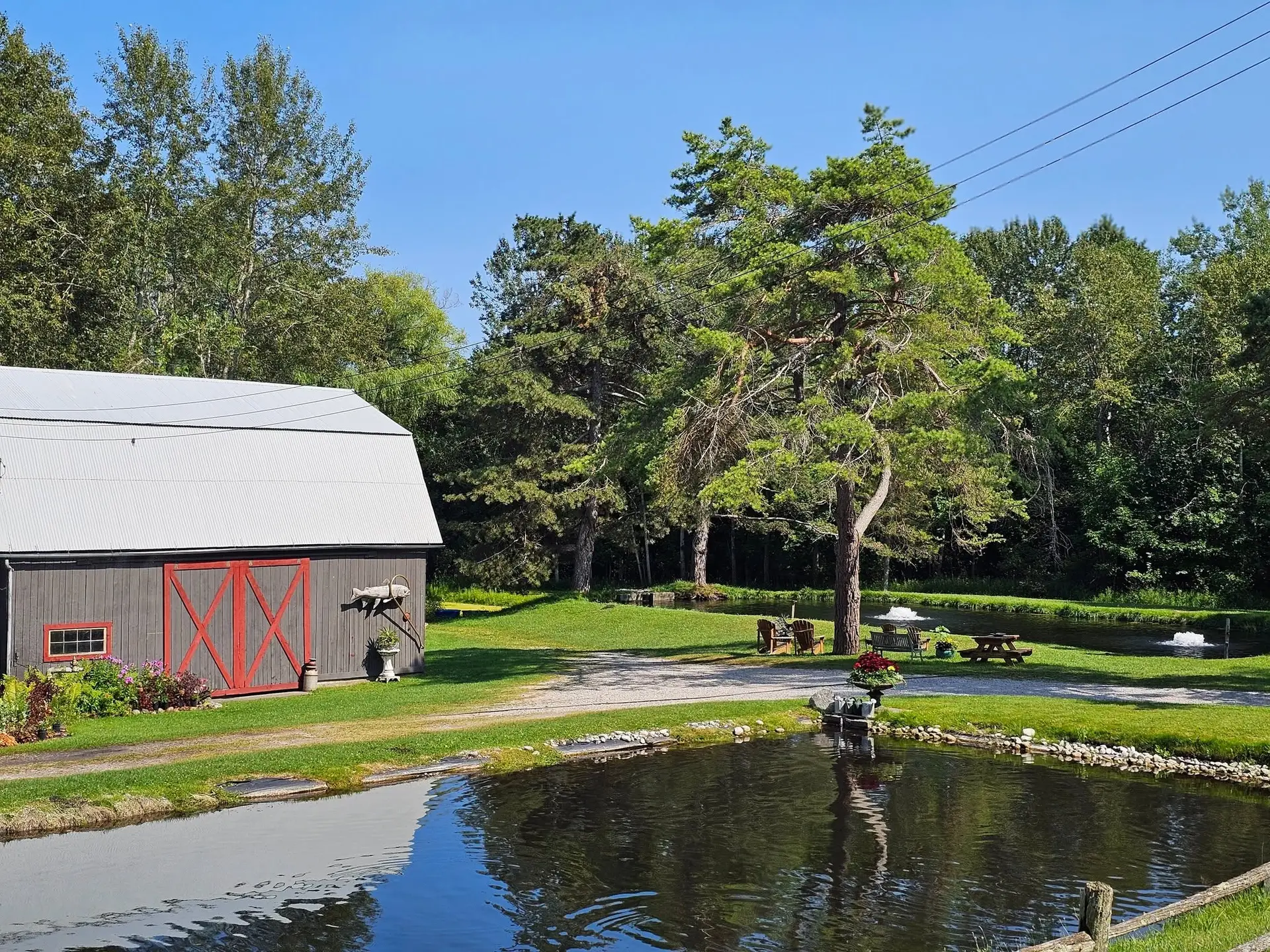
Along a quiet stretch of Lake Huron shoreline north of Harrisville, cold groundwater surfaces from an aquifer and flows downhill through a series of man-made ponds, raceways, and hatchery tanks. For nearly a century, that water has sustained trout and the people who raise them. At Cedarbrook Trout Farm, Jerry Kahn and his family have spent decades caring for rainbow, brown, and brook trout, continuing a tradition that began in 1928 and has become woven into the identity of Michigan’s fisheries landscape.
Many anglers know Cedarbrook as the home of “Big Brownie,” the legendary tagged trout released in Lake Huron each year for the Michigan Brown Trout Festival held in Alpena, Mich.. But the farm’s history reaches far deeper than a single fish or even a single farm. It reflects nearly a century of aquaculture and more than 150 years of fish culture traditions that helped shape the state’s fisheries.
Michigan’s long relationship with aquaculture, fish hatcheries, fisheries conservation, and the communities that grew among them are a story worth telling and includes:
- 19th-century hatcheries built to rescue declining wild fish populations;
- family-owned fish farms for stocking, seafood sales and fee-fishing opportunities;
- businesses catching and selling baitfish for recreational fishing.
Raising fish in the Great Lakes region
Aquaculture has long been part of Michigan’s agricultural heritage reflecting its role in contributing to local community food systems, strengthening local economies, and growing the diversity of the state’s agricultural and seafood industries. Compared with other agricultural sectors, the state’s aquaculture industry is relatively small, yet it offers substantial opportunities for growth and development. Today, the sector raises around 24 different species including fish like the rainbow trout, lake sturgeon, and walleye.
Aquaculture is defined as the breeding, rearing, and harvesting of fish, shellfish, algae, and other water organisms under controlled conditions for at least part of their lifecycle. In Michigan and the Great Lakes region, aquaculture is also commonly referred to as “hatcheries,” “fish culture,” or “farm-raised.”
Aquaculture operations include federal, state, tribal, and private businesses that raise fish for either stocking (also called planting), bait, ornamental (or pets), fee-fishing, or food. In 2023, the value of aquaculture products sold in the Great Lakes area was nearly $81 million dollars, of which, $5.2 million were sold in Michigan. All of these facilities are operating on land as currently there is no aquaculture on-going in the U.S. waters of the Great Lakes.
Aquaculture comes to Michigan
Michigan’s aquaculture story began more than 150 years ago. By the mid-1800s, the state’s wild fisheries were under increasing pressure: Logging operations altered streams and watersheds; sediment washed into spawning habitats; growing populations demanded food and natural resources; and fish populations that once seemed inexhaustible showed signs of decline. In response, Michigan established the Board of Fish Commissioners and opened its first public hatchery in 1873 named the Crystal Springs Hatchery, located near Pokagon in Cass County.
The goal was straightforward: raise fish in a controlled setting and stock them into lakes and streams to supplement natural reproduction. The term “hatcheries” is commonly understood in the Great Lakes region as a culture system in which the end use of that fish is for stocking, or “planting” fish into a wild habitat as a conservation initiative.
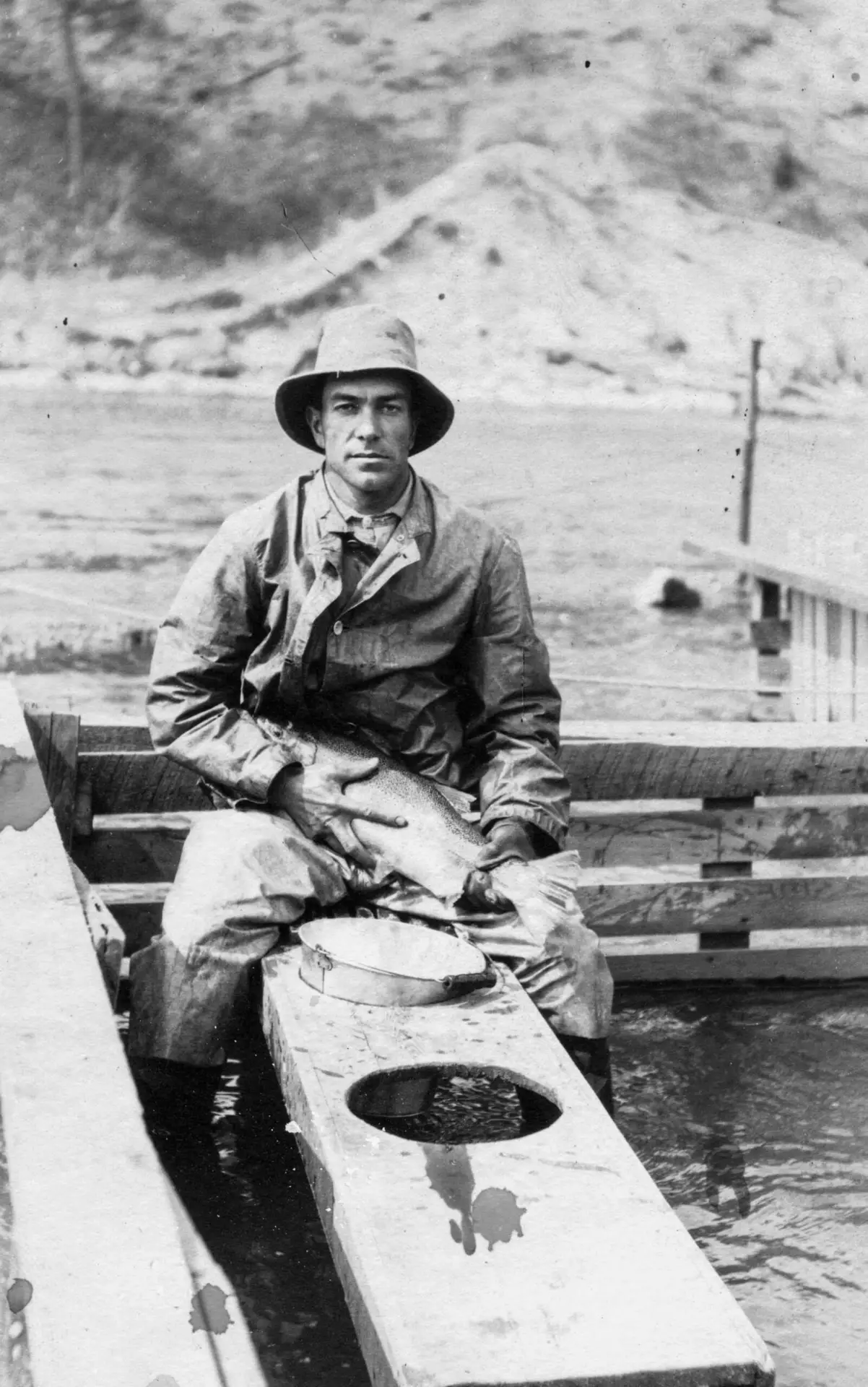
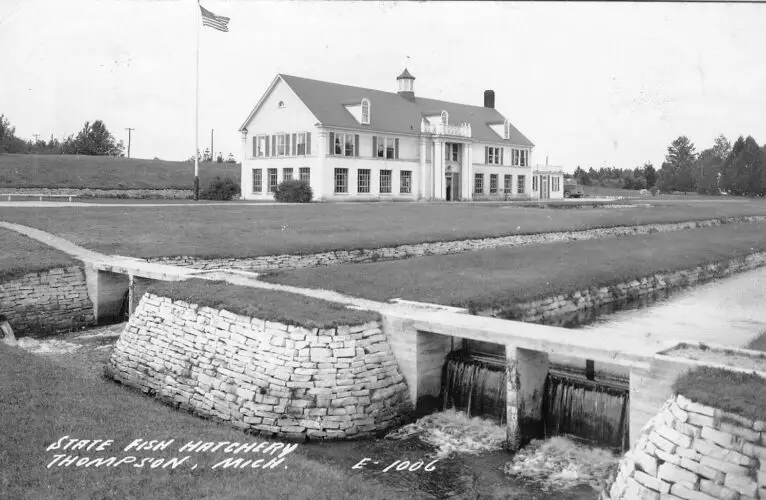
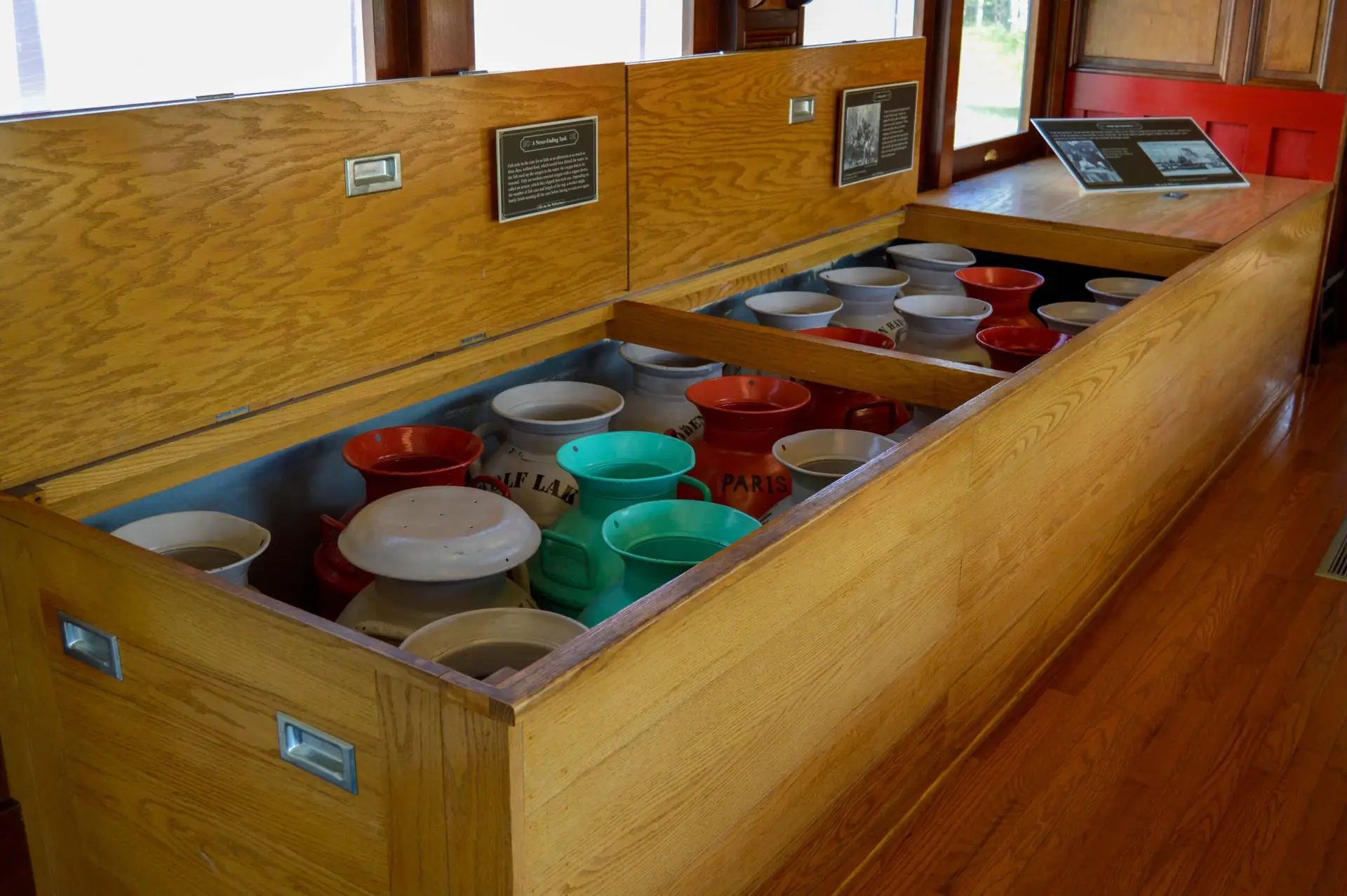
Over the following decades, hatcheries and fish-rearing stations appeared across Michigan. Many were strategically located near railroad lines, allowing fish to be transported efficiently to stocking sites throughout the state. One of the most recognizable symbols of this early fish culture era was the Wolverine, Michigan’s last operational “fish car,” a specially equipped railcar that carried millions of hatchery-raised fish to rivers, lakes, and streams. Today, a full-scale recreation of the historic railcar stands at the Oden State Fish Hatchery Visitor Center, in Alanson, Mich., preserving an important chapter in Michigan’s fisheries and hatchery heritage.
These early hatcheries reflected a growing belief that science and human intervention could help restore and sustain wild fisheries. Over time, Michigan’s approach evolved from simply producing large numbers of newly hatched fish (fry) to raising larger finger-sized fish appropriately called fingerlings, and one-year-old fish (yearlings) that had better chances of survival after stocking. Fisheries research and management also became increasingly sophisticated, particularly after the creation of the Institute for Fisheries Research in 1930. The institute, based at the University of Michigan and established in partnership with the Michigan Department of Conservation, helped usher in a new era of science-based fisheries management that continues to guide efforts today.
As Michigan entered the twentieth century, hatcheries became a core tool in fisheries management, helping shape the fish communities and fishing opportunities that millions of residents and visitors would come to enjoy.
Hatcheries and the modern Great Lakes fishery
Hatcheries have played a central role in rebuilding Great Lakes fisheries, supporting efforts ranging from lake trout restoration to salmon and steelhead fisheries that drive recreational fishing opportunities throughout the region.
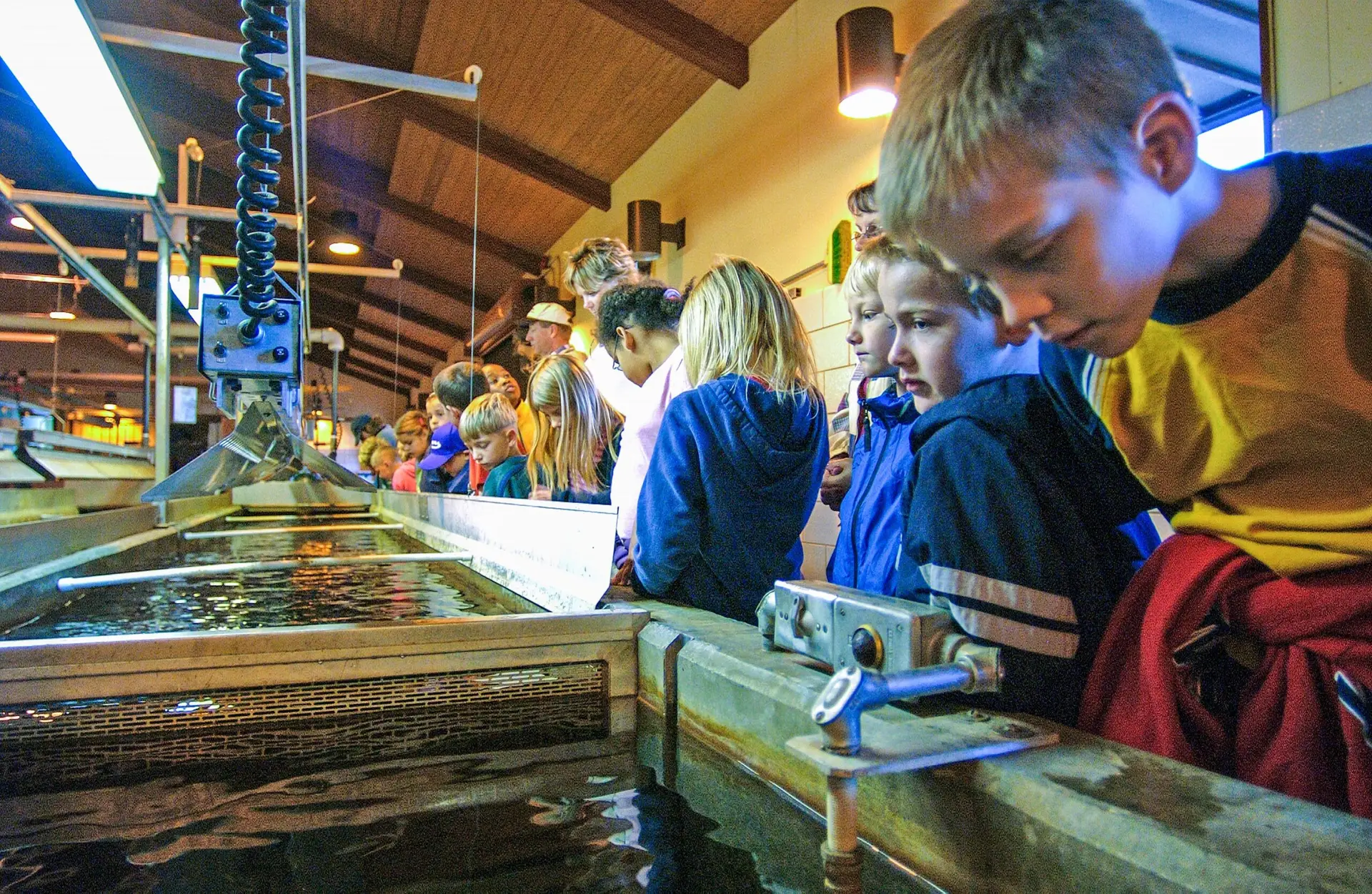
Today, the Michigan Department of Natural Resources operates six major hatcheries and two cooperative facilities. Together, they annually stock between 20 and 30 million fish representing numerous species throughout Michigan waters. These programs support recreational fishing, species restoration, and long-term fisheries management objectives. Hatchery operations are funded largely through fishing license revenues, creating a direct connection between anglers and fisheries conservation.
Federal hatcheries managed by the U.S. Fish and Wildlife Service also support Great Lakes restoration efforts through the propagation of species such as lake trout, lake sturgeon, cisco and other fish important to regional conservation programs.
Tribal nations have also become leaders in hatchery-based fisheries restoration, including the Little River Band of Ottawa Indians, whose Manistee River streamside rearing facility has contributed to the recovery of lake sturgeon while strengthening cultural connections to this species long revered by Indigenous communities. Another leader is the Sault Tribe of Chippewa Indians, whose walleye program has annually stocked around 1,000,000 walleye fry into the St. Marys river. They are also piloting innovative new programs such as streamside rearing of lake whitefish.
Universities have likewise played an important role in advancing and researching modern aquaculture and hatchery science. Lake Superior State University’s Atlantic salmon program highlights the role of universities in developing new aquaculture technologies, training future professionals, and exploring opportunities for sustainable seafood production. Together, state, federal, tribal, university, and private hatchery programs represent a diverse network dedicated to sustaining fisheries, restoring native species, supporting recreational opportunities, and carrying forward Michigan’s long tradition of fish culture.
A trout farm takes root in Harrisville
While public hatcheries expanded across Michigan, private fish farmers were also developing their own operations. Among the state’s longest-rooted operations is Cedarbrook Trout Farm.
Established in 1928, Cedarbrook is recognized as Michigan’s oldest licensed trout farm. Situated on a unique landscape near Harrisville, the farm takes advantage of a natural groundwater source that provides a steady flow of cold, oxygen-rich water ideal for trout production. Water emerging from a nearby aquifer travels through hatchery tanks, raceways, and ponds using gravity alone before returning to the surrounding wetlands. The system requires no pumps and relies largely on the natural conditions that have existed on the property for generations.
Under owner Jerry Kahn’s stewardship, Cedarbrook has become both a working aquaculture business and a local landmark. At one time, visitors could fish from the ponds for a fee, watch fish being cleaned, and learn firsthand how trout are raised from eggs to adulthood. The farm supplies trout for recreational pond stocking, private lakes, communities, and other customers. Today, most of Cedarbrook’s business came from stocking fish. Like many family farms, Cedarbrook has adapted to changing conditions and consumer markets. Recent investments in processing and cold-storage facilities have positioned the operation to expand local food production and provide additional value-added products.
More than fish: Building community traditions
Cedarbrook’s role in the Michigan Brown Trout Festival illustrates the important connection between aquaculture and community identity.
Since 1976, Cedarbrook has supplied the now-famous “Big Brownie,” a farm-raised brown trout released into Lake Huron before the annual fishing tournament. The fish has become a local legend and one of the festival’s most enduring traditions.
Fish farms and hatchery operations help support fishing tournaments, tourism businesses, outdoor traditions, and cultural events that strengthen community connections to water and fisheries. In communities throughout the Great Lakes basin, aquaculture is not just about raising fish. It is about sustaining experiences, memories, and local identities.
The baitfish connection
Aquaculture’s story in Michigan is not limited to hatcheries and trout farms. The state’s baitfish industry represents another vital link between aquaculture and fisheries heritage. Many minnows and other baitfish are commercially harvested from lakes and inland waters to help support Michigan’s recreational fisheries. Once harvested, baitfish are maintained in ponds or tanks before sale with an aquaculture license, thus blending elements of both commercial fishing and aquaculture. Operations such as baitfish and Cedarbrook Trout Farms can be found online across the region using the tool the Great Lakes Fresh Fish Finder.
Though often operating behind the scenes, bait producers and fish dealers provide an essential service to anglers and contribute to local economies. Baitfish are sold to hundreds of licensed bait retailers and continue to serve fishing communities across the state, reflecting on the importance of this sector.
Reaching a new generation
Just as hatchery workers, fish farmers, and fisheries biologists helped build Michigan’s aquaculture industry over the past 150 years, a new generation is beginning to carry that legacy forward.
Education and literacy efforts are underway in the Great Lakes region with leadership provided by entities such as the Great Lakes Aquaculture Collaborative, universities, and youth-based programs. Across the state, students participate in FFA chapters, 4-H clubs, agricultural science programs, and school-based aquaculture projects that provide hands-on experience raising fish, managing aquatic systems, and exploring food production. The Collaborative’s Aquaculture Challenge further immerses students in aquaculture by challenging them to design and manage aquaponics systems, develop business plans, and lead community outreach projects. Together, these educational experiences connect youth to the science and stewardship behind fish culture while helping ensure that Michigan’s long tradition of aquaculture continues into the future.
From the first state hatchery at Crystal Springs in 1873 to modern-day conservation hatcheries, baitfish businesses, and family-operated trout farms like Cedarbrook Trout Farm, Michigan’s aquaculture and hatchery heritage reflects a story about people raising fish to sustain fisheries, communities, and ways of life. For more than 150 years, that work has helped shape the waters and fishing traditions that define the Great Lakes.