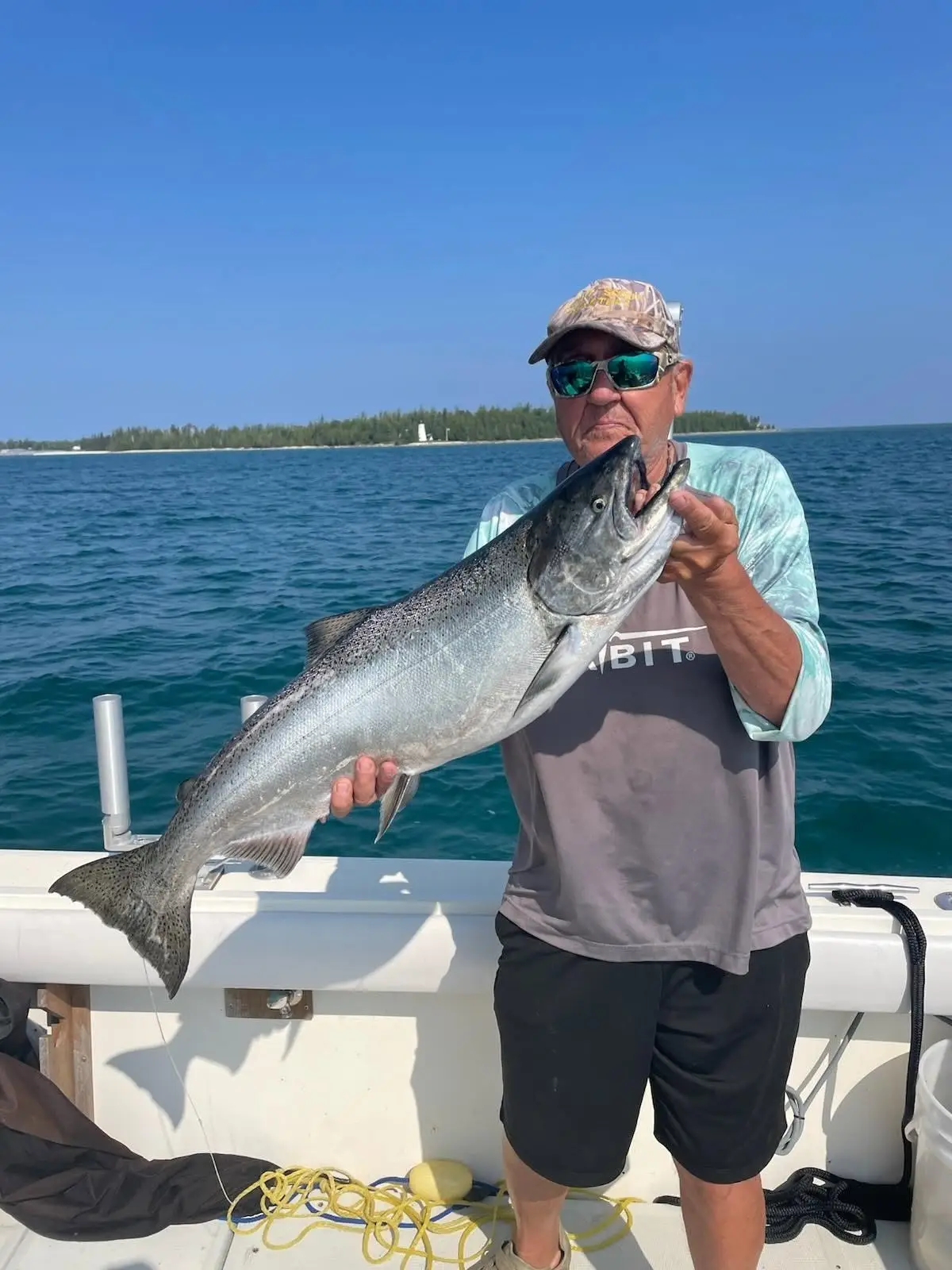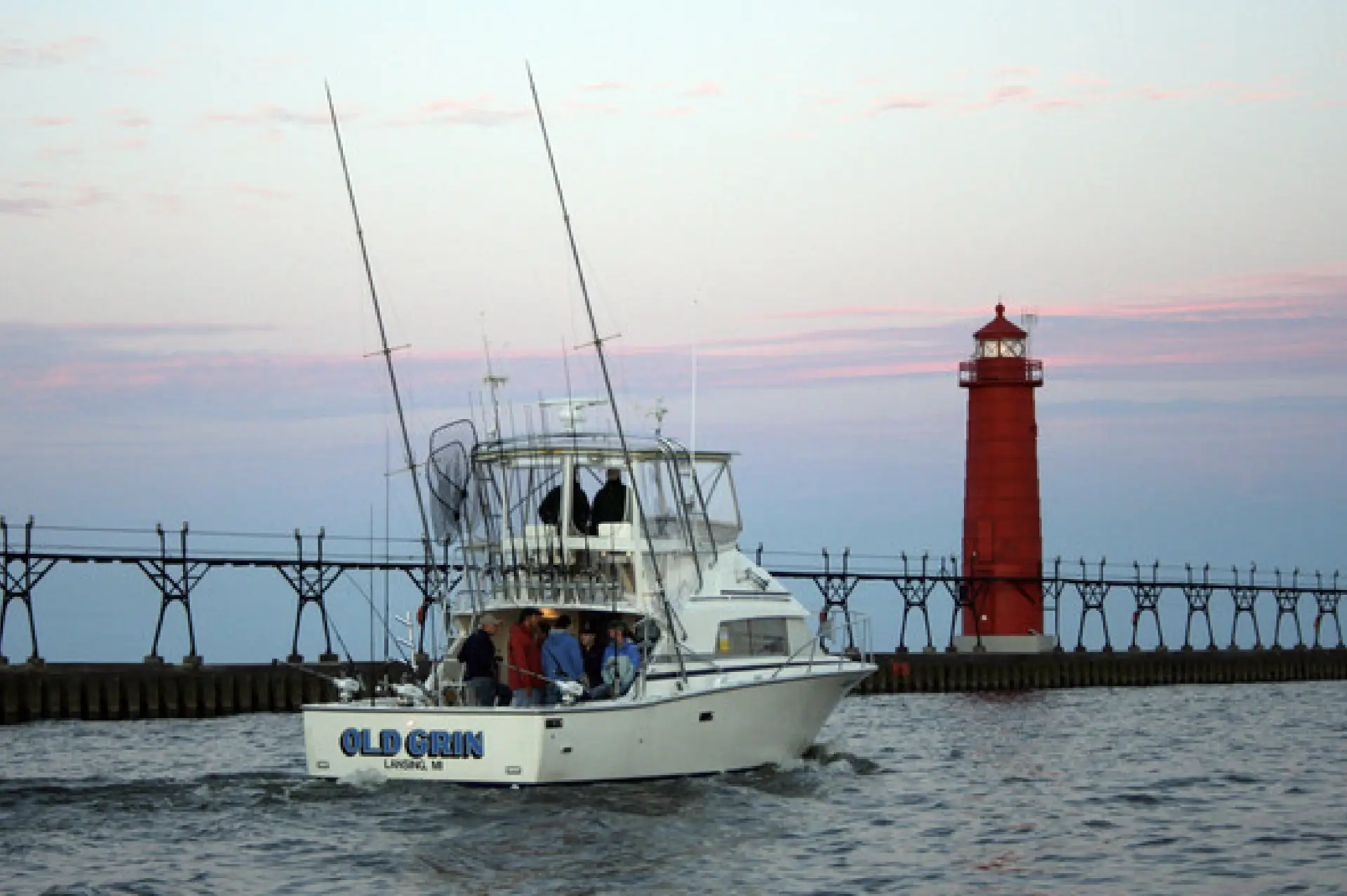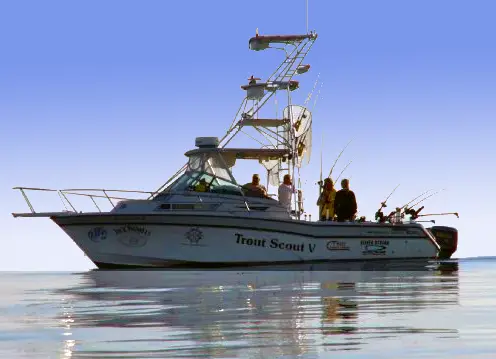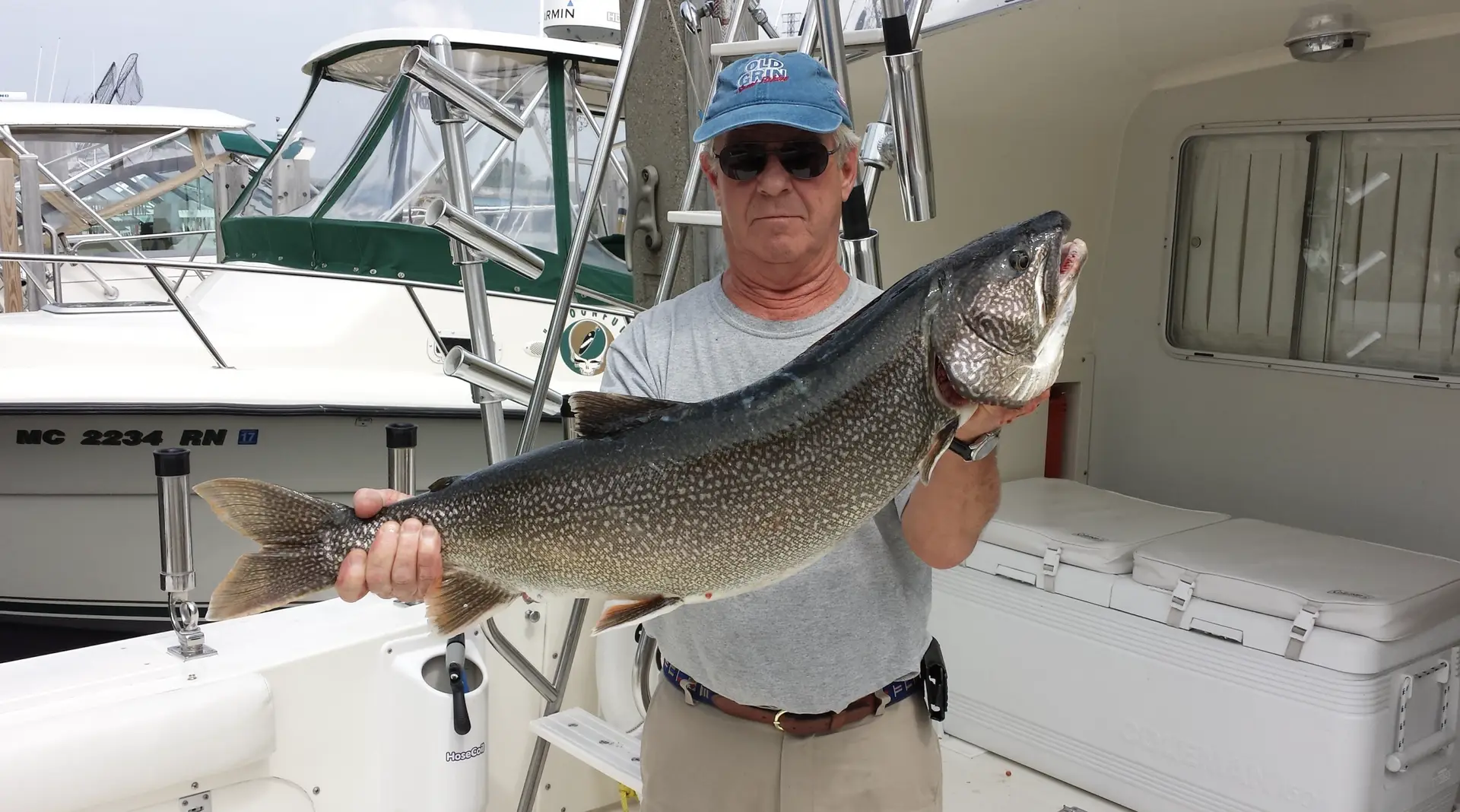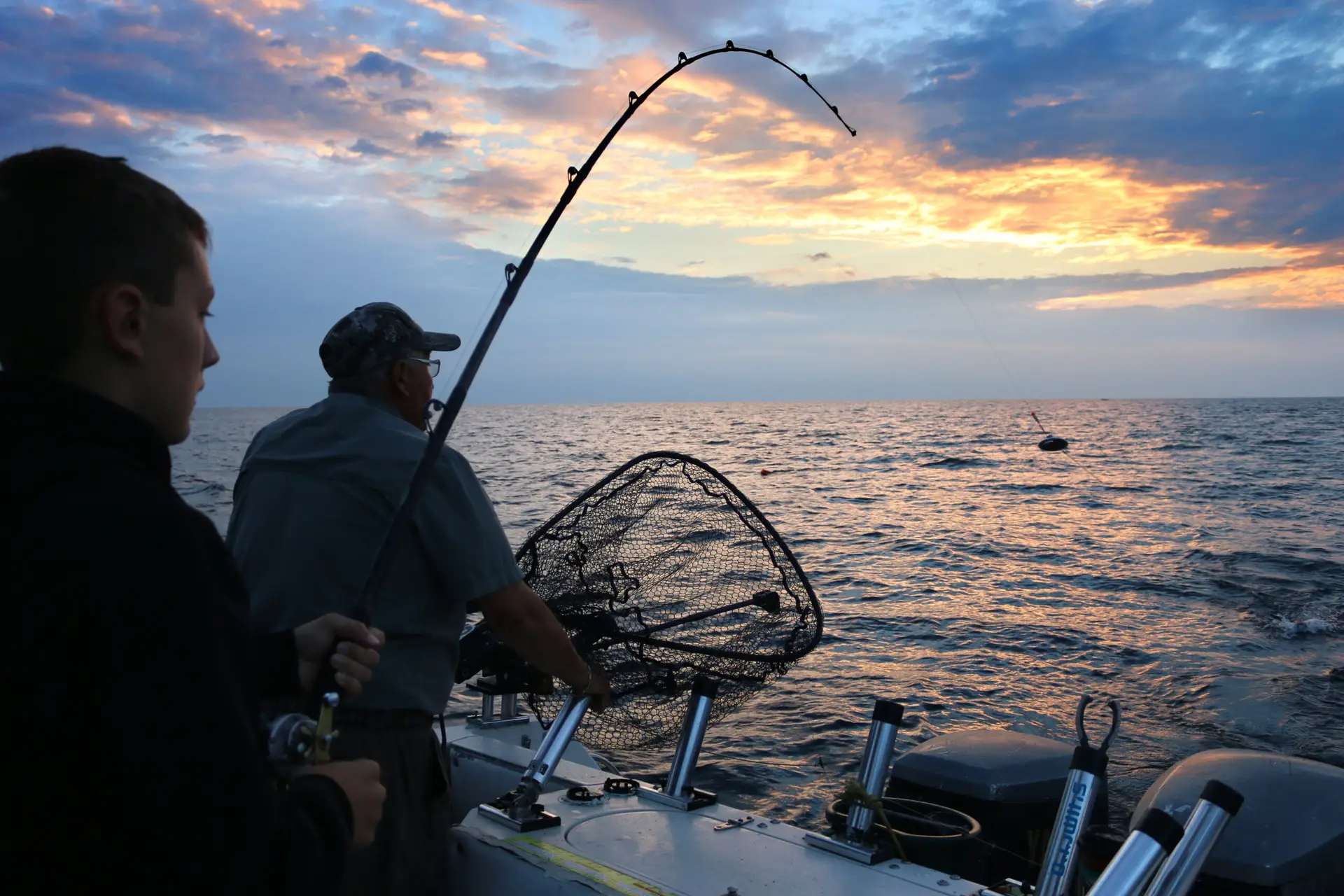
As the sun rises, two boats leave harbors from opposite sides of Michigan.
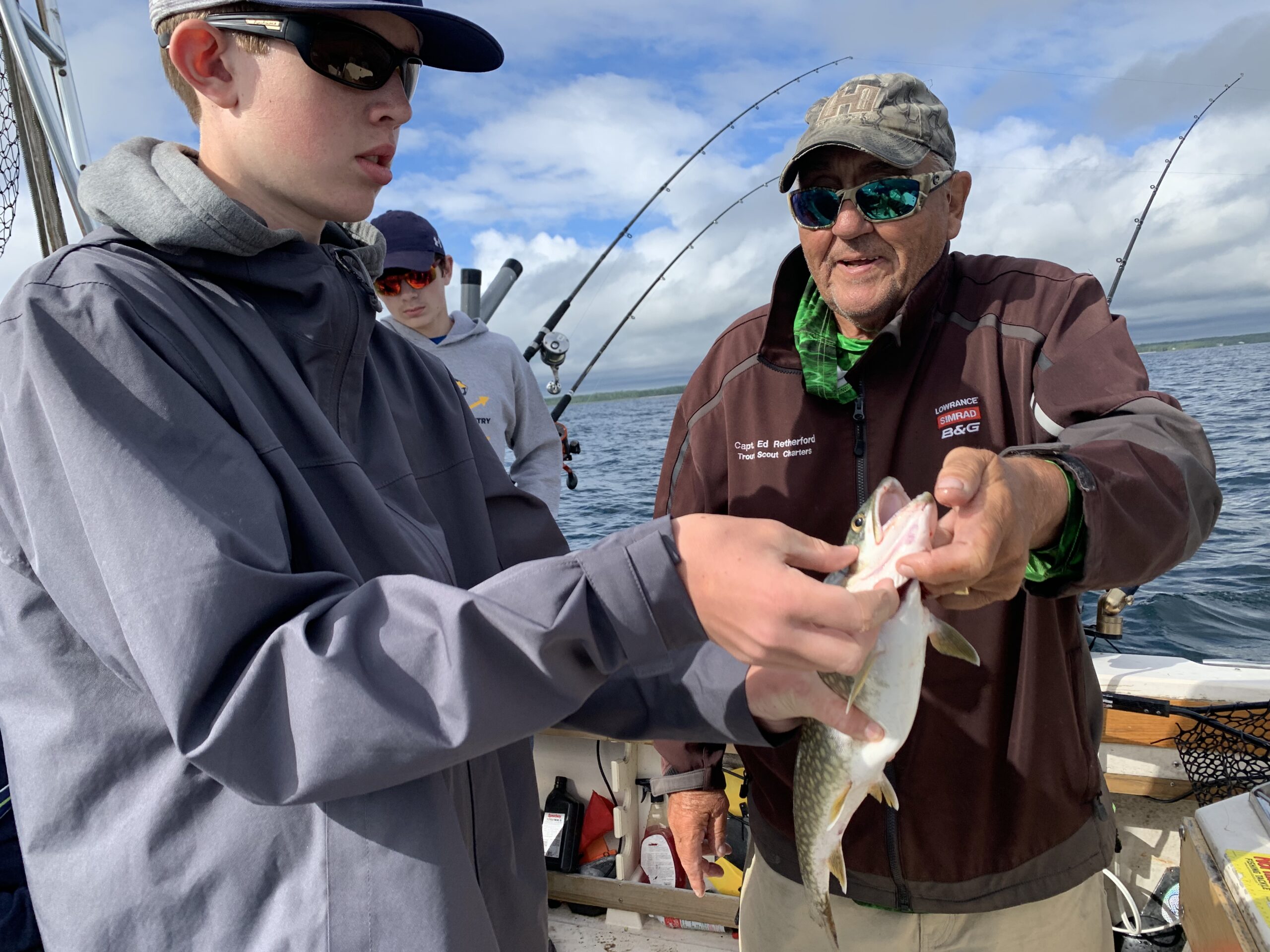
On Lake Huron, out of Alpena, Captain Ed Retherford scans the water from aboard the Trout Scout, the way he has for more than half a century. He draws on those decades of experience to read the water, adapting each day to the ever-changing fishery of Lake Huron. Over the years, he has followed the fish from the height of bounteous Chinook salmon years through to today’s diverse mix of species.
Over on Lake Michigan, Captain Denny Grinold throttles toward deep water from Grand Haven aboard the Old Grin, guiding clients in pursuit of salmon across one of the most productive recreational fisheries in the country.
Their boats work on different lakes, but their stories are deeply connected. Together, they reflect the rise, transformation, and continued importance of charter fishing on the Great Lakes.That story is shaped by science, grounded in coastal communities, and sustained by captains who have adapted alongside the lakes themselves.
From collapse to opportunity
The modern charter fishing industry in Michigan traces its roots to a period of ecological and economic disruption. By the mid-20th century, Great Lakes commercial fisheries were in steep decline due to overfishing, habitat degradation, and the impacts of invasive species.
By the 1960s, collapsing populations of native predator fish such as lake trout gave invasive alewife populations an opening to gain a foothold and explode in numbers across the Great Lakes. Massive die-offs of alewives fouled beaches and shorelines, creating even more dramatic ecological and economic challenges for coastal communities. Fisheries managers saw an opportunity to address multiple problems at once by introducing Pacific salmon as a new top predator to help control alewife populations while also creating a recreational fishery that aligned with growing public interest in outdoor recreation, tourism, and sport fishing.
Coho salmon were stocked beginning in 1966 and Chinook salmon in 1967. The salmon thrived, and anglers followed. A new sport fishery emerged that shifted the economic focus of the lakes from commercial harvest to recreation and tourism.
Many coastal communities that once depended on commercial fishing were forced to adjust. Families with generations of fishing knowledge began looking for new ways to stay connected to the water. Some transitioned to becoming fishery guides and recreational fishing, carrying their skills into a new career that emphasized experience over volume.
The impact was rapid. Charter fleets expanded throughout Michigan’s coastal ports during the 1970s and 1980s as anglers traveled from across the country to chase the salmon. By the 1980s, recreational fishing participation on the Great Lakes had reached record levels, helping establish charter fishing as an important component of Michigan’s tourism economy. By the 1980s, thousands of charter operations were active across the Great Lakes, and coastal communities were experiencing a new kind of seasonal economy.
Organizing an industry: The role of Michigan Sea Grant
As the charter sector expanded, the need for structure and coordination became clear.
In the fall of 1971, a small group of charter captains gathered along Betsie Lake near Frankfort during a coho salmon run. Discussions around shared challenges and opportunities led to a formal step forward.
With support from Michigan State University’s Sea Grant Extension program, incorporation papers were filed in the spring of 1972, establishing what would become the Michigan Charter Boat Association. Sea Grant played an early and important role in helping captains organize and has continued to support the industry through research, outreach, and economic analysis.
Over the decades, researchers have documented the industry’s importance to coastal communities. Studies led by Michigan Sea Grant and Michigan State University found charter fishing generated nearly $20 million annually on average over a twenty-year period, supporting hundreds of thousands of employment hours through local businesses, restaurants, marinas, lodging facilities, and tourism services.
The association grew into a statewide network representing hundreds of captains. It serves as a professional organization, a hub for communication, and a voice for the industry in management discussions.
Captain Ed Retherford: A lifetime on Lake Huron
Few individuals reflect the arc of Lake Huron’s charter fishery more clearly than Captain Ed Retherford.
Retherford’s connection to fishing began early. He was introduced to the water by his grandfather in the late 1940s and grew up in a family rooted in outdoor traditions. His career began in 1969 when he started guiding on the Au Sable River, at the same time salmon were being introduced into the Great Lakes system. By the early 1970s, he had moved into full-time charter fishing out of Alpena.
Retherford became closely associated with Lake Huron’s brown trout fishery, helping build Alpena’s reputation as a destination where anglers could target large brown trout. During the 1970s and 1980s, Alpena became nationally known for its brown trout fishery, drawing anglers from across the country. Retherford earned a reputation as one of the fishery’s leading guides and later became known by many anglers as “Mr. Brown Trout.”
Over time, his career tracked major ecological changes within the lake. In the 1990s, changes in hatchery practices and the increasing presence of invasive species began to alter fish populations. In the early 2000s, the collapse of alewife populations, a major food source for salmon, disrupted the food web. Chinook salmon then declined significantly. The impact on charter fishing was substantial, including a sharp decline in trips on Lake Huron during that period.
Michigan Sea Grant research documented how closely coastal economies were tied to fisheries health. Between 2002 and 2009, Lake Huron experienced a 49 percent decline in charter fishing trips as the Chinook salmon fishery collapsed, resulting in an estimated loss of more than $1.4 million in economic activity. Yet ports such as those on Saginaw Bay demonstrated the industry’s adaptability as improved walleye fishing helped offset some losses.
Retherford adjusted his approach and shifted to target mixed-species trips and ensured charter fishing opportunities were not lost from the landscape of coastal tourism experiences. He also served in advisory roles and engaged with youth through educational programs. His career illustrates both the challenges and the adaptability required to remain successful on Lake Huron.
“I always said that you should learn one new thing a day about our Great Lakes, fishing, environment or changes in the lake. I always valued that I was on the lake taking people out and teaching about the lakes,” Retherford said.
Captain Denny Grinold: Leadership on Lake Michigan
On Lake Michigan, Captain Denny Grinold represents a complementary story within the charter industry, one shaped by both time on the water and leadership within the profession.
Grinold has fished the Great Lakes since 1973 and built his charter business during the height of the salmon fishery. Operating out of Grand Haven, he has spent decades guiding anglers and refining his approach to a dynamic fishery.
“A charter boat is a platform for those who may not have time or the means to equip a boat for Great Lakes fishing,” said Grinold. “I have dedicated myself to ensure this fishery exists for generations to come.”
In addition to his work as a captain, Grinold has played a key role in industry leadership. He served as president of the Michigan Charter Boat Association and has worked with fisheries managers as a U.S. advisor to the Great Lakes Fishery Commission. He has received recognition for both his fishing ability and his contributions to the field, including several major industry awards and honors. “I feel blessed to have been a part of “Greatest Fish Story Ever Told,” the introduction of Pacific salmon into the Great Lakes,” he said.
Lake Michigan has experienced its own changes over time, including disease events and adjustments in stocking levels, but the charter industry there has remained relatively stable. Grinold’s career reflects that stability and highlights the importance of collaboration among fishing captains, scientists, and managers in maintaining a productive fishery.
Economic engine for coastal communities
Charter fishing continues to play a significant role in Michigan’s coastal economy. Michigan Sea Grant studies indicate the state’s charter fishing industry includes more than 600 licensed captains and generates roughly tens of millions annually in economic activity, supporting tourism, small businesses, and hundreds of thousands of employment hours in coastal communities.
Approximately 10 percent of Great Lakes anglers hire charter captains each year. For many visitors, charter trips provide access to specialized boats, equipment, local knowledge, and fishing opportunities they would not otherwise experience. Charter captains often serve as ambassadors for their communities, introducing visitors to local restaurants, museums, shops, and waterfront destinations.
Many charter clients travel from outside the immediate area, contributing to local economies by staying in hotels, dining in restaurants, and purchasing goods and services. Programs such as Michigan’s Catch and Cook initiative connects anglers with local restaurants to prepare their fresh catch and extend the value of a day on the water into the surrounding community.
Even as participation has fluctuated over time, the economic contribution of charter fishing has remained strong, reinforcing its importance as a tourism driver. Captains play an important role in shaping visitors’ experiences. Their knowledge, professionalism, and ability to connect people to the resource contribute to high levels of customer satisfaction and repeat visitation.
Adapting to a changing Great Lakes
The success of Michigan’s charter fishing industry has depended on its ability to adapt. Changes in fish populations, prey availability, and broader ecosystem conditions continue to influence how and where people fish. Management decisions, including adjustments to stocking levels, reflect efforts to balance predator and prey dynamics in the lakes.
Science collaborations facilitated through the Great Lakes Fishery Commission and engagement in the management decision process with Michigan Department of Natural Resources remain critical. Education programs supported by Michigan Sea Grant and partners continue to provide tools, data, and outreach that help guide decision-making and support for the charter fishing industry.
For more than half a century, charter captains have occupied a unique place within Great Lakes fisheries. Part guide, part entrepreneur, part educator, and part citizen scientist, they spend hundreds of days each year on the water observing changes in fish populations, water conditions, and angler preferences. Their experiences provide an important connection between fisheries management, coastal communities, and the public.
Together, the stories of Captains Retherford and Grinold show how an industry built in response to change has continued to evolve. These captains reflect the core ideals of the Michigan Charter Boat Association and the broader fleet across the state, building businesses and sustaining coastal economies by connecting customers and communities to the shared recreational experience of Great Lakes fisheries.