Historic fishing vessels carry stories of how Great Lakes fisheries, past and present, have shaped Michigan’s coastal communities.
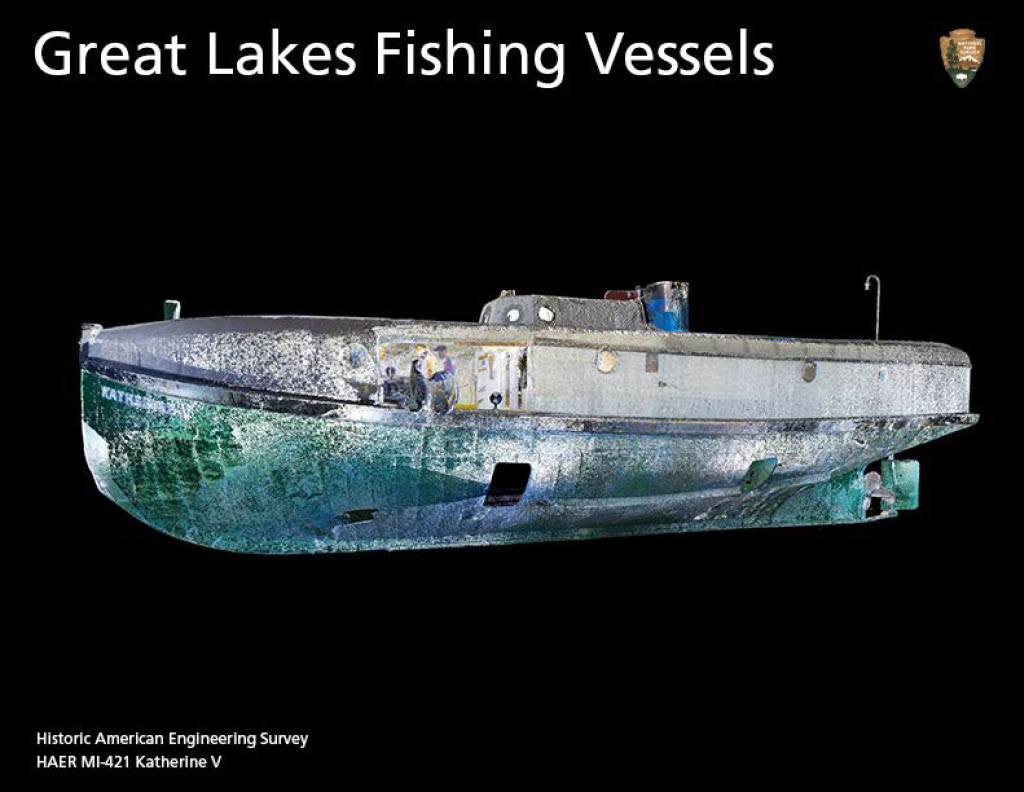
The historic gill net fish tug Katherine V offers a distinctly Michigan voice within the story of Great Lakes fisheries heritage. Built for work in northern Lake Huron’s powerful waters and shaped by decades of social, technological, environmental change, the vessel’s unique design reflects the ingenuity and resilience of the region’s fishing communities. Today, Katherine V lies at the center of the Great Lakes Fisheries Heritage exhibit at the Besser Museum for Northeast Michigan in Alpena, Mich. Within the iconic vessel’s thick oak beams and steel-clad hull exists a remarkable life-history brought forward through the research of maritime archaeologist Cassandra Sadler, whose early documentation work began tracing the vessel’s construction, use, and cultural significance. Through this careful pairing of technical research and lived history, Katherine V emerges not only as a preserved artifact, but as a storyteller. It carries forward the experiences of the people and fisheries that defined Michigan’s coastal communities from the 1600s to early 1900s.
Katherine V also helps introduce a broader, collaborative effort to document and preserve historic Great Lakes commercial fishing watercraft. The vessel’s story provides an entry into a network of partners, vessels, and communities working together to ensure that the heritage of Michigan’s fisheries is not only protected, but actively shared. What follows reflects both Katherine V’s journey and a larger regional narrative, one that connects past and present through coordinated stewardship, research, and public engagement.
Preserving the working heritage of the Great Lakes demands more than individual effort, it requires a network of partners committed to safeguarding shared cultural resources. Across Michigan, that collaboration has taken shape through a multi‑year initiative led by the National Park Service’s Historic American Engineering Record (HAER) and the Great Lakes Fisheries Heritage Trail (GLFHT). Together with museums, fisheries partners, and coastal communities, they are documenting historic commercial fishing vessels that represent more than a century of life, labor, and livelihood on the Great Lakes.
A regional partnership with a shared mission
The Great Lakes Fisheries Heritage Trail is a partnership of museums, fisheries partners, science centers, and coastal heritage organizations working collectively to interpret the history of Great Lakes fishing. Exhibits and programs highlighted by the Trail explore ecological change, fisheries management, gear and vessel evolution, and the social and economic forces that shaped fishing communities.
HAER, supported by the Council of American Maritime Museums and the Sally Kress Tompkins Maritime Intern Program, contributes national‑level documentation expertise to this regional network. Michigan Sea Grant has served as a connector among the Great Lakes Fisheries Heritage Trail network helping to facilitate partner relationships, supporting field logistics, and ensuring that research aligns with broader educational and stewardship goals.
Establishing the research foundation
The project’s first phase was completed by Cassandra Sadler, then a graduate student at the University of West Florida. Funded through the NPS HAER program and connected through Michigan Sea Grant and the GLFHT network, from 2021 to 2022, Sadler researched and documented ten historically significant commercial fishing vessels across Michigan.
Her work provided:
- Three‑dimensional understanding of vessel types and construction
- Archival‑grade historical reports with comparative insights into fisheries gear, design trends, and cultural context
- Documentation of underrepresented histories, including Indigenous and family‑operated fisheries
This early collaboration set the stage for deeper, sustained partnerships. After completing the project, Sadler joined NOAA’s Thunder Bay National Marine Sanctuary as a resource protection specialist, and now provides leadership in connecting NOAA’s Maritime Heritage mission and work among the Great Lakes Fisheries Heritage Trail network.
Expanding documentation with 3D laser scanning
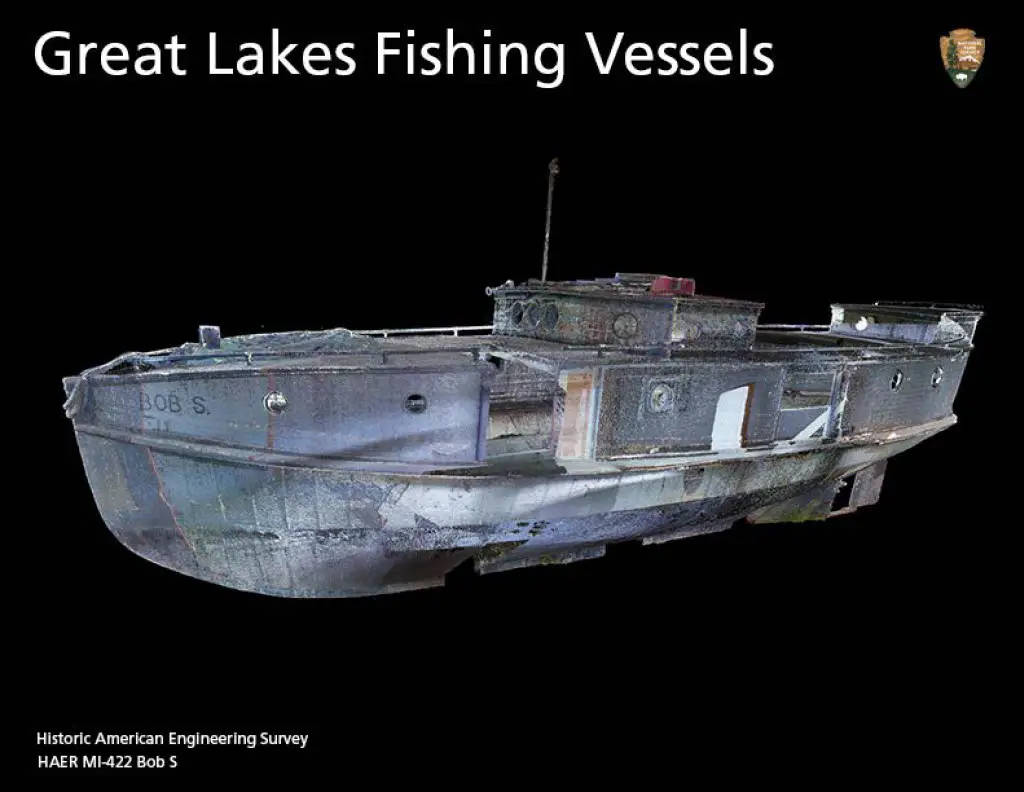
Building on Sadler’s reports, HAER returned in 2024 with architect Todd Croteau and Avery Dunavant, a Sally Kress Tompkins Maritime Intern, to undertake additional intensive field documentation. Over two weeks, the team laser‑scanned, photographed, and recorded vessels across Michigan’s coastal communities.
This phase produced:
- High‑resolution laser scan datasets
- Photogrammetry imaging
- Archival‑quality photography
- Material to support the creation of HAER measured drawings following federal standards
These assets will be permanently archived at the Library of Congress, ensuring long‑term public access and supporting museum interpretation, heritage tourism, STEM education, and future research.
Vessels documented through the HAER–GLFHT collaboration
The historic commercial fishing vessels documented through this multi‑year HAER–GLFHT collaboration collectively illustrate the depth and diversity of Michigan’s maritime heritage, and the Katherine V offers a compelling example of what these boats represent. This wood‑hulled gill‑net tug (constructed by two Native American boatbuilders and preserved today at the Besser Museum for Northeast Michigan) embodies the ingenuity, cultural heritage, and technical adaptation that defined Great Lakes fisheries for over a century. Its fully enclosed turtle‑back cabin, original equipment, and long working life across both U.S. and Canadian waters of Lake Huron make it one of the most complete surviving examples of its kind, recognized by its 2003 listing in the National Register of Historic Places. The vessel now carries a comprehensive HAER documentation package linking Cassandra Sadler’s Phase I report, Todd Croteau’s 2024 laser scanning, and active museum stewardship. It serves as a model for how each vessel in this project is being preserved, interpreted, and connected to its broader historical context.
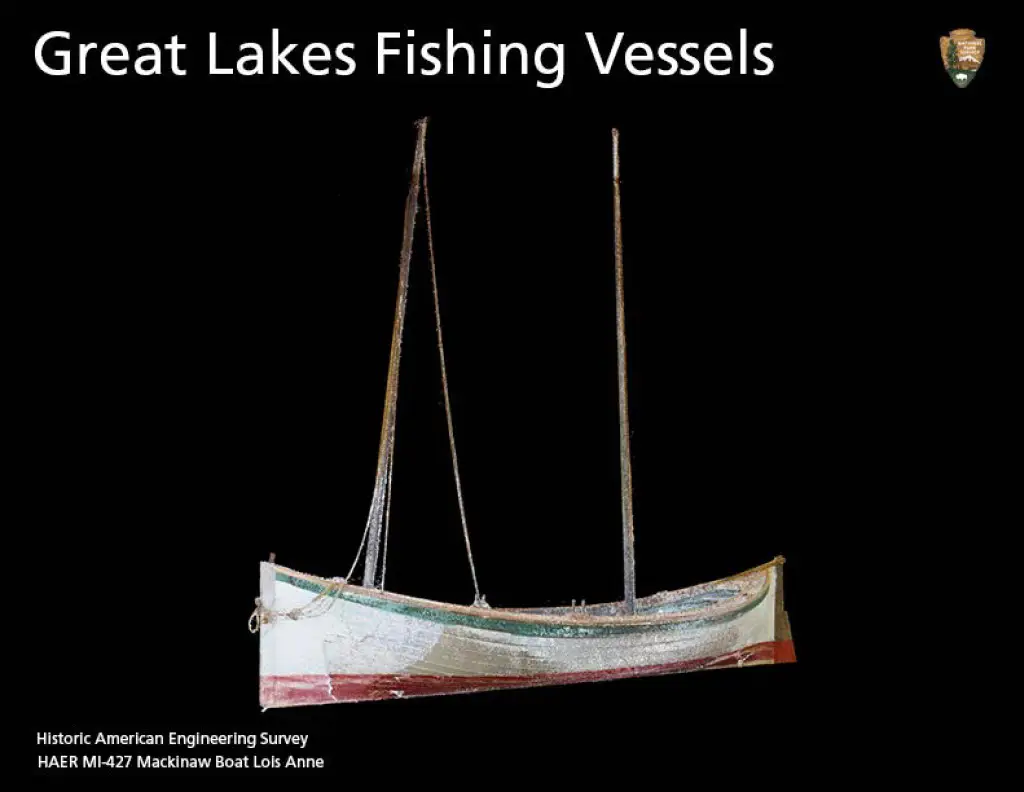
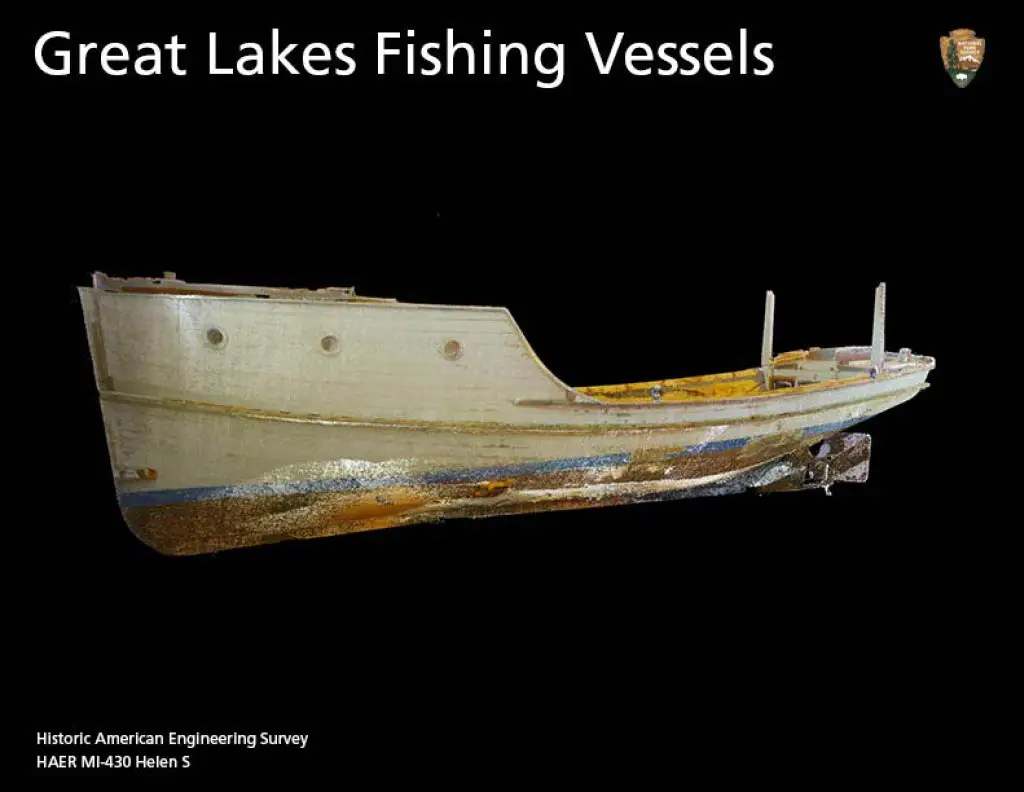
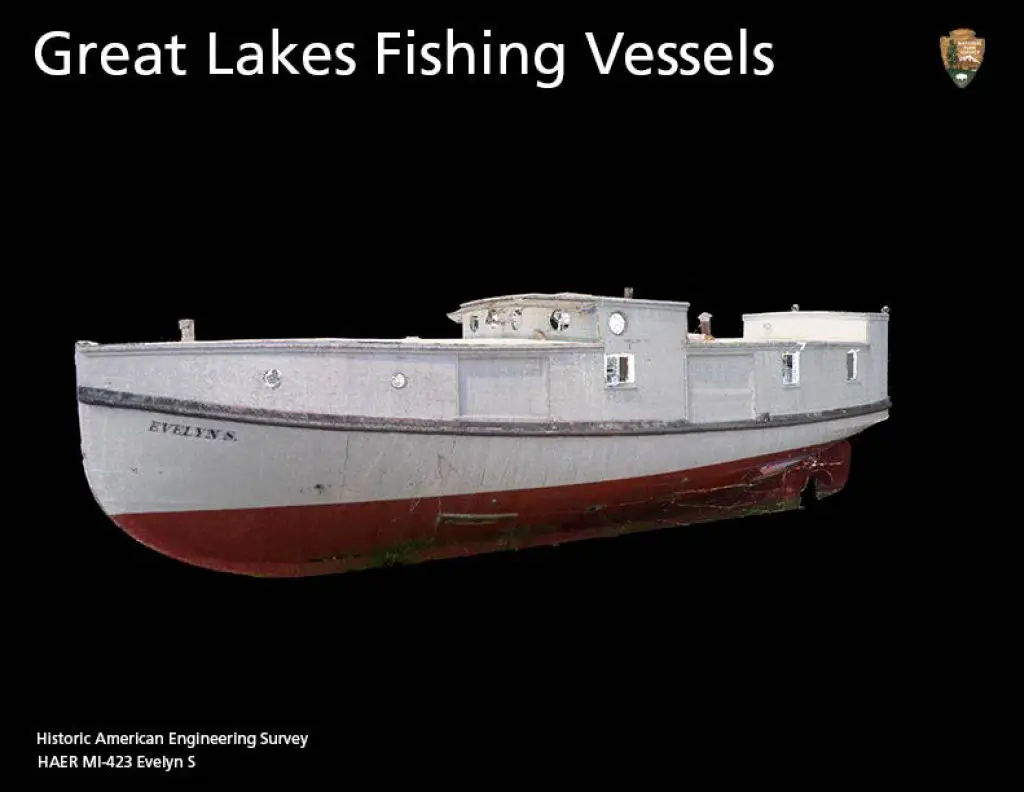
The vessels documented across Phase I and Phase II represent a remarkably diverse cross‑section of Great Lakes commercial fishing and maritime workboats, each reflecting the technological, ecological, and cultural shifts that shaped Michigan’s coastal communities. From classic wooden gill‑net tugs such as Katherine V, Bob S, Evelyn S, Kate A, Elsie J, Joy, and Helen S, to small‑craft types like the Mackinaw Boat Lois Anne, these boats embody the adaptation and ingenuity required to work the often harsh and unpredictable waters of the Great Lakes. Their hull forms, ice‑protective structures, engine types, and gear configurations showcase evolving strategies for harvesting whitefish, lake trout, and other species during periods of intense fisheries activity. Collectively, these vessels illustrate the lived experience of fishing families, Indigenous boatbuilders, and multi‑generational coastal communities whose livelihoods were tied to the lakes.
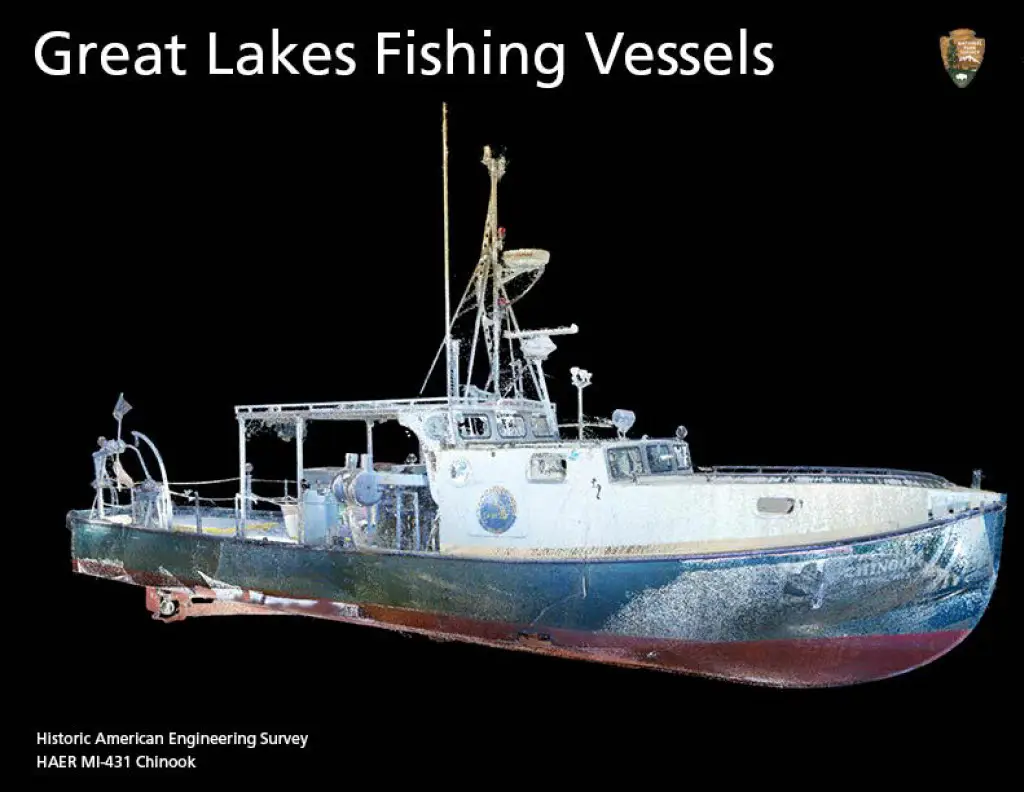
Other vessels within the collection add important depth and contrast to this maritime story. The Research Vessel Chinook, for example, represents the scientific and management era that followed commercial fisheries’ peak years, marking a shift toward ecological monitoring, stock assessment, and conservation science. Together, the full set of documented vessels captures a broad continuum of Great Lakes maritime heritage. This collective documentation effort allows audiences to see not only the individual histories of each vessel but also how they interrelate to tell a larger, region‑wide narrative of adaptation, stewardship, and the ongoing relationship between people and the Great Lakes.
Below is the full set of vessels documented, and their respective historical documentation reports resulting from this project:
- GILL-NET TUG KATHERINE V PDF (Besser Museum for Northeast Michigan)
- GILL-NET TUG BOB S PDF (Beaver Island Marine Museum)
- GILL-NET TUG EVELYN S PDF (Michigan Maritime Museum)
- GILL-NET TUG KATE A PDF (West Shore Fishing Museum_
- GILL-NET TUG ELSIE J PDF (South Haven)
- MACKINAW BOAT LOIS ANNE PDF (Les Cheneaux Maritime Museum)
- GILL-NET TUG JANICE SUE PDF (Fishtown)
- TRAP-NET BOAT JOY PDF (Fishtown)
- GILL-NET TUG HELEN S PDF (Maritime Heritage Alliance)
- RESEARCH VESSEL CHINOOK PDF (Besser Museum for Northeast Michigan)
A model for sustained collaborative stewardship
The HAER–GLFHT vessel documentation initiative demonstrates what is possible when local, regional, and national partners work together. It strengthens museum networks, expands public access to maritime heritage, and preserves the working vessels and related fishing stories that shaped Great Lakes communities across Michigan.