Vern Applegate and the fight to save Great Lakes fisheries from the sea lamprey
The Crisis That Changed Everything
By the time scientist Vern Applegate arrived at Hammond Bay Biological Station along the northern Lake Huron shoreline, the Great Lakes were already in crisis.
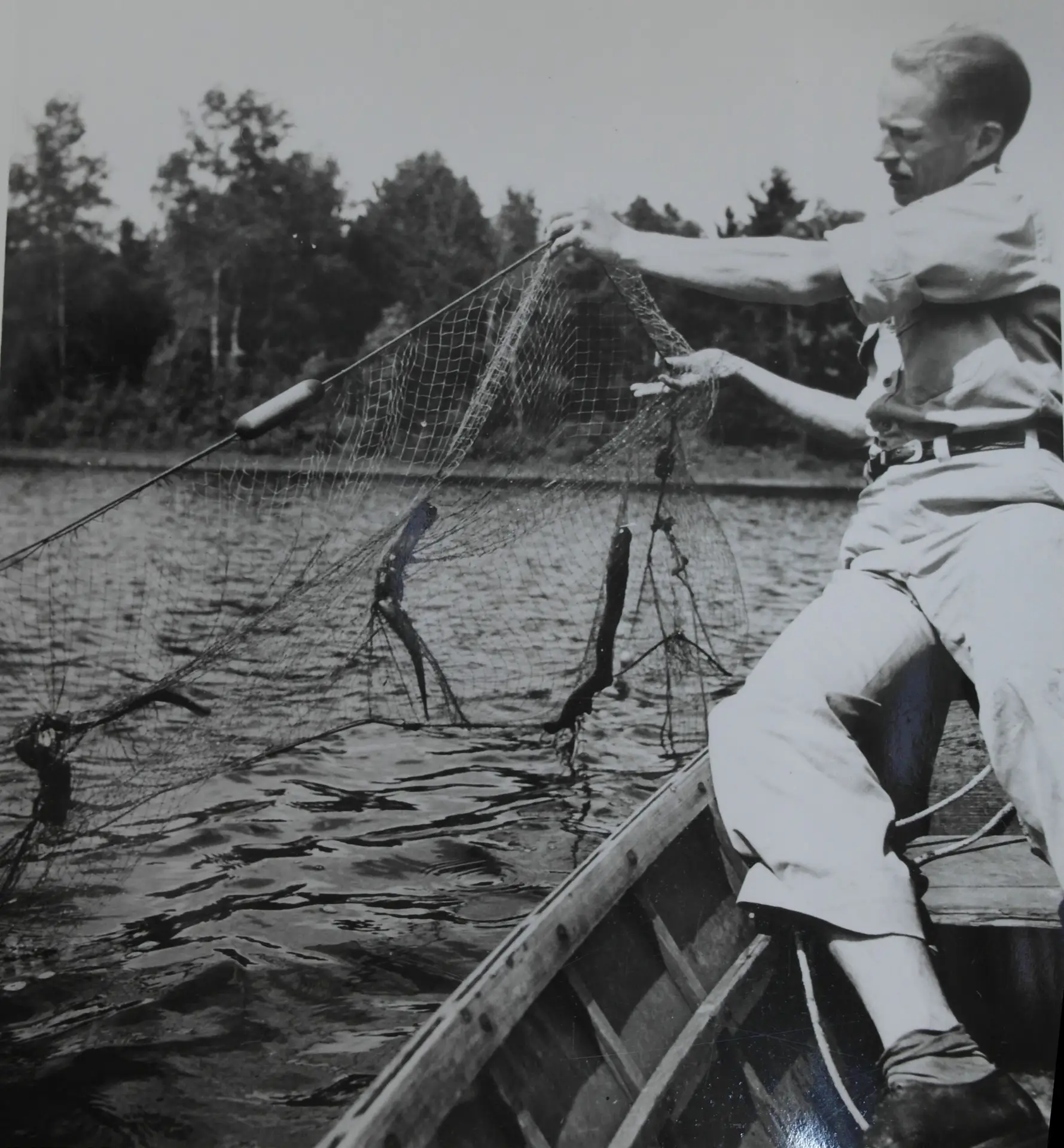
For generations, cold, deep waters had supported thriving populations of lake trout, burbot, cisco and whitefish. These species formed the backbone of a commercial fishing economy that sustained families and communities across the region. Fish houses lined the shore. Nets dried in the wind. Boats returned heavy with the catch of the day.
But by the mid‑20th century, that way of life was unraveling. Decades of overfishing, habitat loss, and rising pollution were already creating problems for fish populations, and now a new and formidable predator had entered the system. The arrival of the sea lamprey now accelerated the ecological challenges leading the Great Lakes fisheries toward collapse.
The invasive sea lamprey had quietly made its way into the Great Lakes from the Atlantic Ocean. First documented in Lake Ontario in the 1830s, its spread accelerated following improvements to shipping canals that allowed it to bypass natural barriers like Niagara Falls. By 1936, sea lampreys had entered Lake Michigan. By 1938, they had reached Lake Superior. Within a few short decades, they had colonized all five Great Lakes.
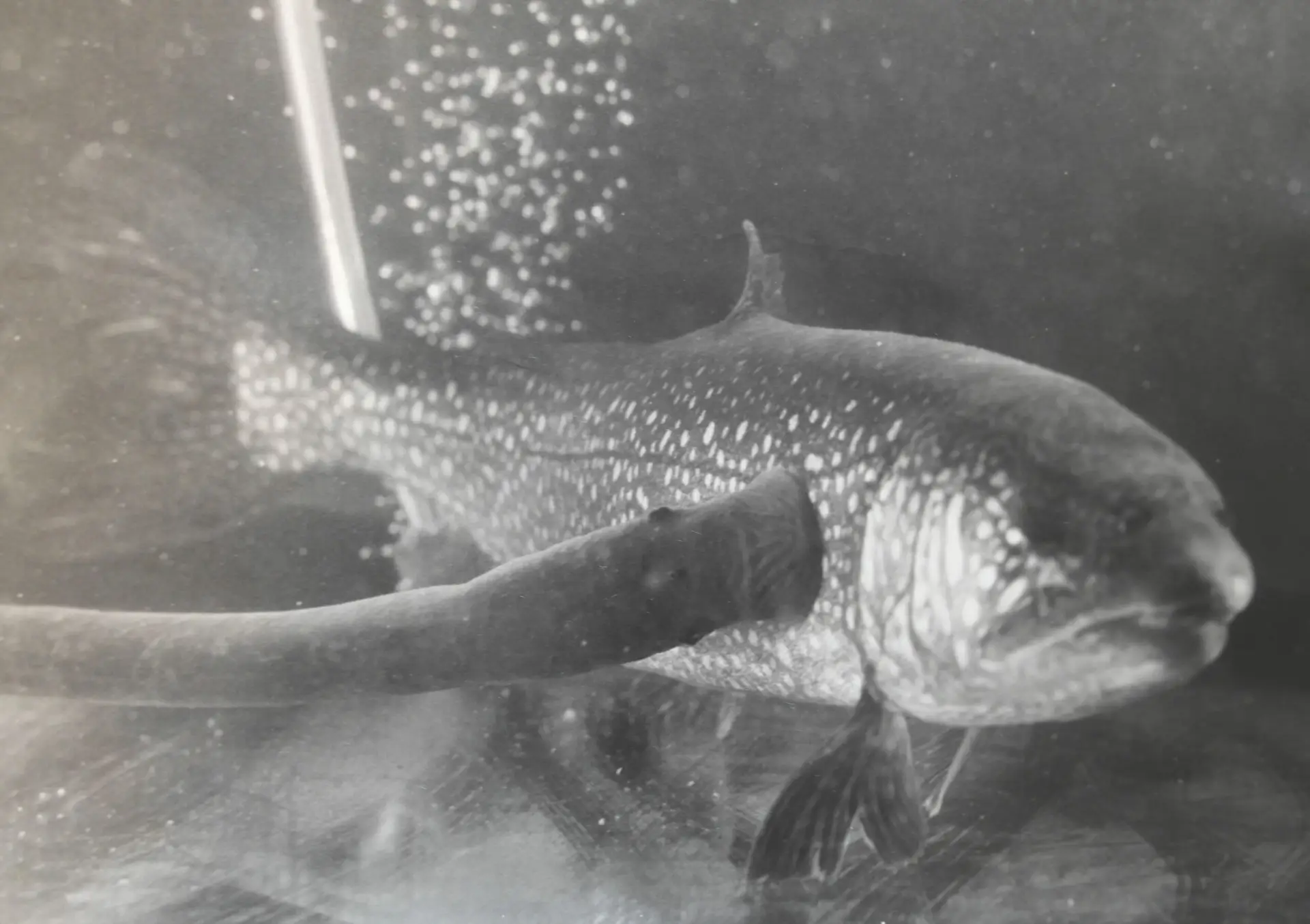
These predators were different from the native lamprey that already lived in the lakes. Sea lamprey are an ancient, jawless fish equipped with a sucking-disc mouth and hooked teeth to attach to the side of a fish, as well as a razor-sharp rasping tongue. Once attached to a host fish, sea lampreys feed parasitically on blood and body fluids. Each individual is capable of killing up to 40 pounds (18 kilograms) of Great Lakes fish during its 12-18 month parasitic phase. By the 1940s and 1950s, their collective impact reached staggering levels. More than 100 million pounds of Great Lakes fish were being lost annually to sea lamprey predation, far exceeding the region’s commercial harvest of key species such as lake trout.
The results rippled across both ecosystems and communities. Lake trout populations collapsed in many waters. Commercial boats sat idle at docks. Fishing families, some with generations of history on the lakes, saw their livelihoods disappear.
Sea lamprey impact was devastating. What had once seemed like an inexhaustible resource was now uncertain. And few believed the system could recover.
The Invasion and Its Impacts
The sea lamprey invasion unfolded over more than a century, shaped by both ecological change and human infrastructure.
Once established, sea lampreys disproportionately targeted large, deep‑water fish species. These species were not only ecologically important, they were also central to the commercial fisheries that had supplied food to both the United States and Canada for over a century.
The consequences extended beyond economics. The loss of top predators disrupted food webs and altered the balance of Great Lakes ecosystems. Communities that depended on fishing faced economic hardship and uncertainty. What had been a stable, productive system entered a period of rapid and alarming decline.
By the 1950s, the Great Lakes fishery had reached a biological low point.
Yet those same years would also mark the beginning of a remarkable turnaround.
The Search for a Solution
Amid this ecological crisis, a small team of scientists began working toward what many saw as an impossible goal: controlling a widespread, highly adaptive invasive species across one of the largest freshwater systems on Earth.
At the center of that effort was Vern Applegate.
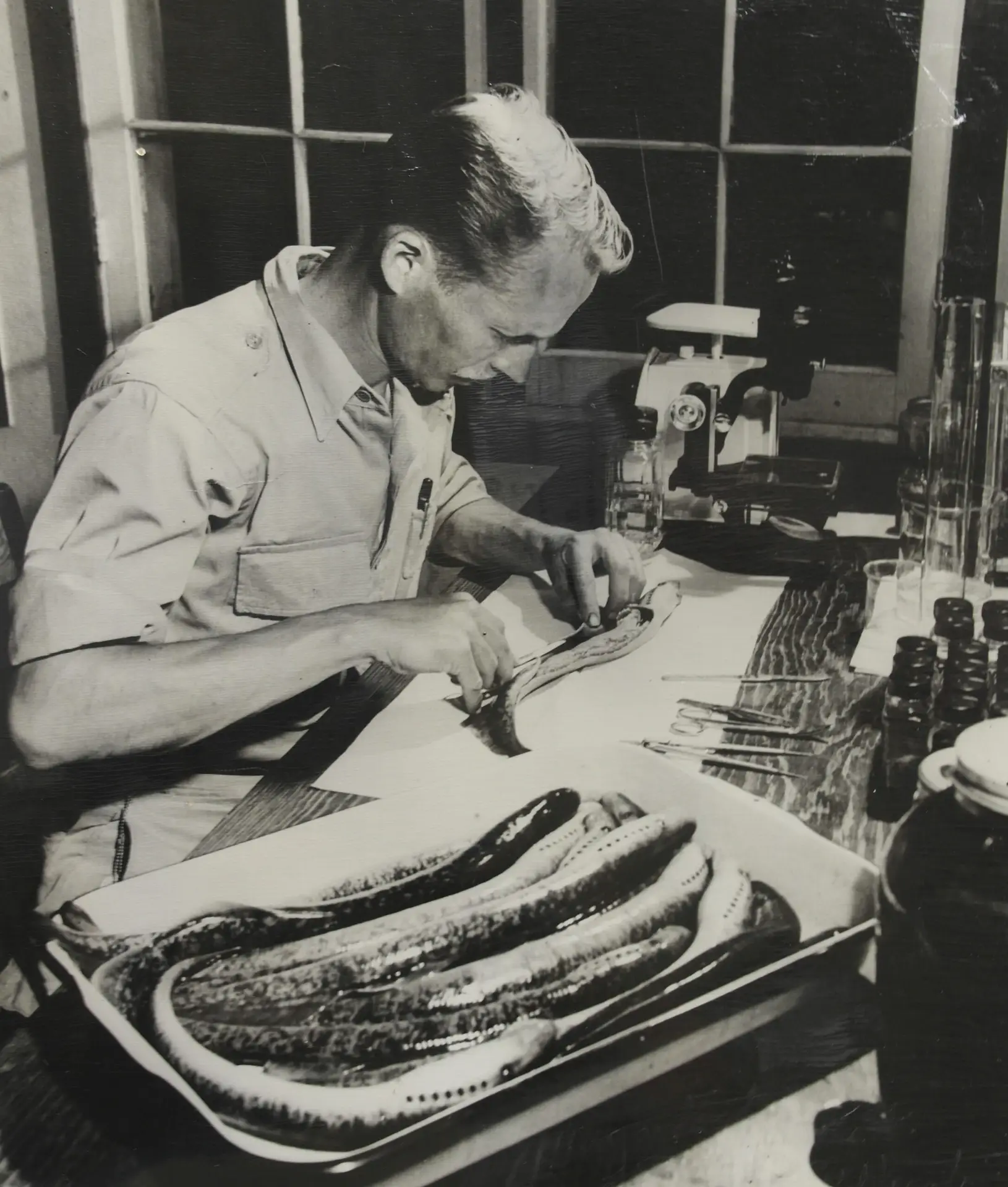
Working out of Hammond Bay Biological Station, a former U.S. Coast Guard facility turned federal research laboratory in Northeast Michigan, Applegate and his colleagues approached the problem with determination and persistence. Their task was daunting. Any solution would need to target sea lampreys specifically, without causing unacceptable harm to other fish and aquatic life.
Between 1953 and 1955, the team tested thousands of chemical compounds in search of a selective control method. In simple laboratory conditions, each compound was introduced into water containing both sea lamprey larvae and non‑target fish species such as trout or bluegill.
The process was methodical, repetitive, and at times discouraging.
Jar after jar. Compound after compound. Day after day.
Out of more than 5,000 substances tested, only a small fraction showed any promise. But in 1956, one compound stood out.
The 5,209th compound, known as TFM (4-nitro-3-(trifluorometl)hyphenol), demonstrated a critical breakthrough: at low concentrations it could eliminate sea lamprey larvae while minimizing impacts on most other fish.
Follow‑up testing confirmed the results. In 1958, the first lampricide treatments were carried out in Lake Superior tributaries, where managers focused early efforts on protecting remnant native lake trout populations that were on the brink of collapse. As success became evident, treatments expanded in subsequent years to tributaries across the other Great Lakes, moving west to east as part of a coordinated basin‑wide control strategy.
After years of uncertainty, scientists had found a way to fight back.
From Discovery to Action
The discovery of TFM was only the beginning. Implementing a basin‑wide control program required coordination, investment, and long‑term commitment.
The establishment of the Great Lakes Fishery Commission in 1954 created the framework needed for this effort. Formed through a binational agreement between the United States and Canada, the Commission brought together agencies, scientists, and fisheries managers from across jurisdictional boundaries to address shared challenges, including sea lamprey control.
Much of the early research supporting this work took place at what is now the United States Geological Survey (USGS) Hammond Bay Biological Station in Northeast Michigan. There, Applegate and his colleagues laid the scientific foundation for modern management approaches.
TFM treatments targeted sea lamprey larvae in tributary streams, where they spend several years burrowed in sediment before transforming into parasitic adults. By focusing on this vulnerable life stage, managers could significantly reduce the number of sea lampreys entering the lakes.
The results were dramatic. Sea lamprey populations began to decline.
By the late 1990s and early 2000s, sea lamprey populations had been reduced by 90 percent in many areas across the Great Lakes basin. Fish populations began to recover. Restoration efforts, including stocking programs, gained traction. Commercial and recreational fisheries, once on the brink of collapse, showed new signs of life.
The Great Lakes had not been restored overnight but the trajectory had changed.
A Model of Collaborative Management
As the program matured, sea lamprey control evolved into a model of international collaboration and adaptive management.
- 1830s: First documented in Lake Ontario.
- 1880s: Populations increased as environmental changes improved spawning habitat.
- 1921: Confirmed in Lake Erie following expansion of the Welland Canal.
- 1936–1938: Spread into Lakes Michigan, Huron, and Superior.
- 1954: Creation of the Great Lakes Fishery Commission.
- 1958: First successful chemical control treatments began.
By the 1980s, the Great Lakes Fishery Commission had adopted an integrated pest management approach that is carried out by the United States Fish and Wildlife Service and Fisheries and Oceans Canada. Rather than relying solely on lampricides, multiple tools were combined to improve effectiveness and efficiency.
These tools include:
- Lampricides (TFM and Bayluscide) to target larvae in streams.
- Barriers to prevent spawning migrations.
- Trapping systems to remove adult sea lampreys and assess control program success.
The commission also invests in continued research to develop additional, supplemental forms of control, including:
- Sterile male release techniques to reduce reproduction.
- Pheromone‑based methods to manipulate sea lamprey behavior.
- Improved trapping systems.
- Seasonal electric barriers to block sea lampreys from reaching spawning habitat.
Together, these strategies have sustained long‑term control of sea lamprey populations across the basin and will continue to do so in the future.
Today, instead of losing more than 100 million pounds of fish each year, the estimated losses are a fraction of that amount. While the species has not been eradicated, it is actively and effectively managed.
Equally important, the commission continues to serve as a forum for cooperation and brings together state, provincial, tribal, and federal partners, along with universities and stakeholders, to guide fisheries science and management across the Great Lakes.
Understanding Lampreys in Context
While the sea lamprey is widely recognized for its destructive role in the Great Lakes, it is important to view it within a broader ecological and evolutionary context.
Globally, there are about 40 species of lampreys. Within the Great Lakes region, several native species, including northern brook, American brook, chestnut, and silver lampreys, play important ecological roles. Unlike sea lampreys, native species do not often kill their host fish.
These native lampreys are indicators of healthy, connected waterways and contribute to overall biodiversity.
Educational efforts led by organizations such as Michigan Sea Grant and the Great Lakes Fishery Commission help broaden public understanding of this diversity. Through interpretive materials, exhibits, and outreach, they highlight differences among species, life cycles, and ecological functions.
This perspective encourages a more nuanced view that acknowledges sea lampreys as an invasive species in this context, while also appreciating the ecological importance of native lampreys worldwide.
Today, sea lamprey control remains an ongoing responsibility. The system requires continued monitoring, treatment, and cooperation across jurisdictions. The challenge has not disappeared—but it is being met.
Visitors can explore this story across the Great Lakes Fisheries Heritage Trail—through historic sites, interpretive centers, and educational exhibits. At Hammond Bay Biological Station itself, the legacy of this work continues, connecting past innovation with present‑day stewardship.
The Great Lakes are healthier today because of these efforts. And the lessons learned—about science, persistence, and shared responsibility—remain just as important as the fish that once again swim their waters.