On summer days in the early 1960s, the shoreline of Lake Michigan told a troubling story. Swaths of dead fish stretched for miles.
The small, silvery bodies of alewives washed ashore in such numbers that beaches were nearly unusable. The smell carried into coastal towns and tourism suffered. For many, the Great Lakes no longer felt like a place of abundance, but a system out of balance.
In 1964, when Dr. Howard A. Tanner stepped into his role as chief of the Michigan Department of Conservation’s Fish Division this was the reality he faced. Native fish populations had sharply declined. Lake trout, once a dominant predator, had been decimated by invasive sea lampreys. Alewives, themselves non-native, had surged without natural controls. Decades of overfishing, habitat degradation, and pollution had layered one problem upon another.
Tanner was not handed a simple problem to fix. He inherited a collapsed food web and a public searching for answers.
A fishery in crisis
The Great Lakes had long supported vibrant coastal communities and commercial fisheries. But by the mid-20th century, those systems had begun to unravel. Industrialization and shoreline development altered tributaries and spawning grounds. Heavy fishing pressure reduced native stocks. At the same time, invasive species entered through shipping corridors such as the Welland Canal.
Among the most destructive of these invaders was the parasitic sea lamprey. Lake trout, a keystone predator, were especially vulnerable. As their populations declined, a critical link in the ecosystem disappeared. In their place, the invasive alewives thrived. These small fish reproduced rapidly and consumed the eggs and young of native species, compounding the decline. Without predators to keep their numbers in check, alewives expanded to levels the ecosystem could not sustain. The result was mass die-offs. Millions of fish washed ashore each year, creating both an ecological and a highly visible public problem.
For Tanner, these conditions defined the starting point. The Great Lakes were not simply in decline. They had reached a point where bold action would be required.
“Do something spectacular”
Tanner later reflected that he was challenged to “do something … spectacular.” That challenge became both a directive and a guiding philosophy.
Rather than treating each problem independently, Tanner approached the system as a whole. He recognized that the alewife explosion was not the root problem, but a symptom of imbalance. Without predators, their population surged. If a predator could be reintroduced or replaced, the food web might begin to stabilize.
Working with colleague Wayne Tody, Tanner began exploring a novel idea. In the Pacific Northwest, species such as coho and Chinook salmon were well known as aggressive predators. They fed heavily on smaller forage fish and supported thriving recreational fisheries. They could also adapt from saltwater to freshwater. Could those same species be introduced into the Great Lakes?
At the time, the idea was controversial. Introducing a non-native species into the largest freshwater system on Earth challenged prevailing scientific caution. Critics warned of unintended consequences. Supporters saw an opportunity to address a growing crisis.
Tanner and Tody did not move forward lightly. Their work drew on fisheries science, including understanding salmon life cycles, adaptability to freshwater systems, and their potential role in the Great Lakes food web. Their research culminated in a foundational paper outlining the feasibility of introducing coho salmon into the basin. The proposal was both bold and grounded in science. It was, in every sense, an experiment.
April 2, 1966: A beginning
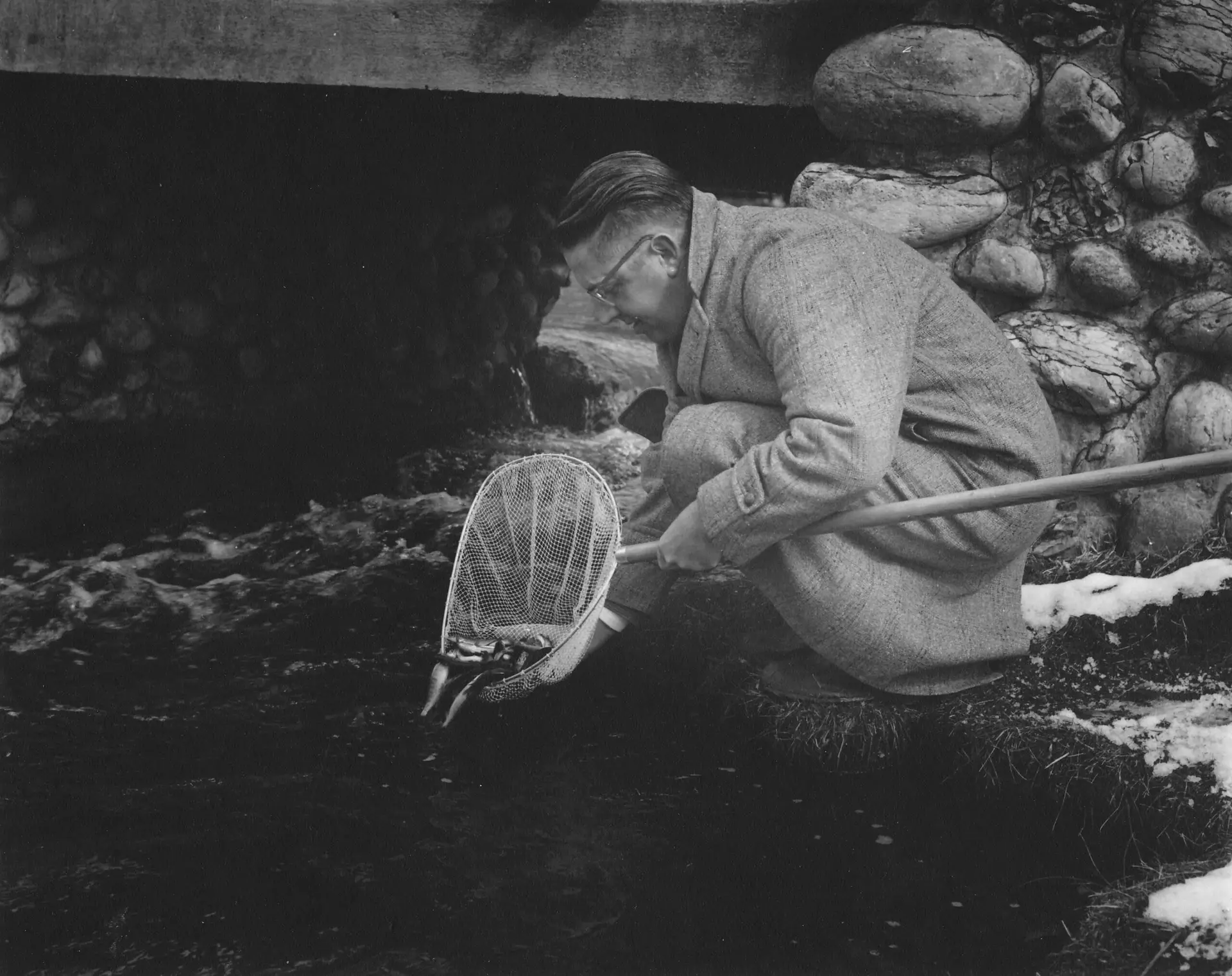
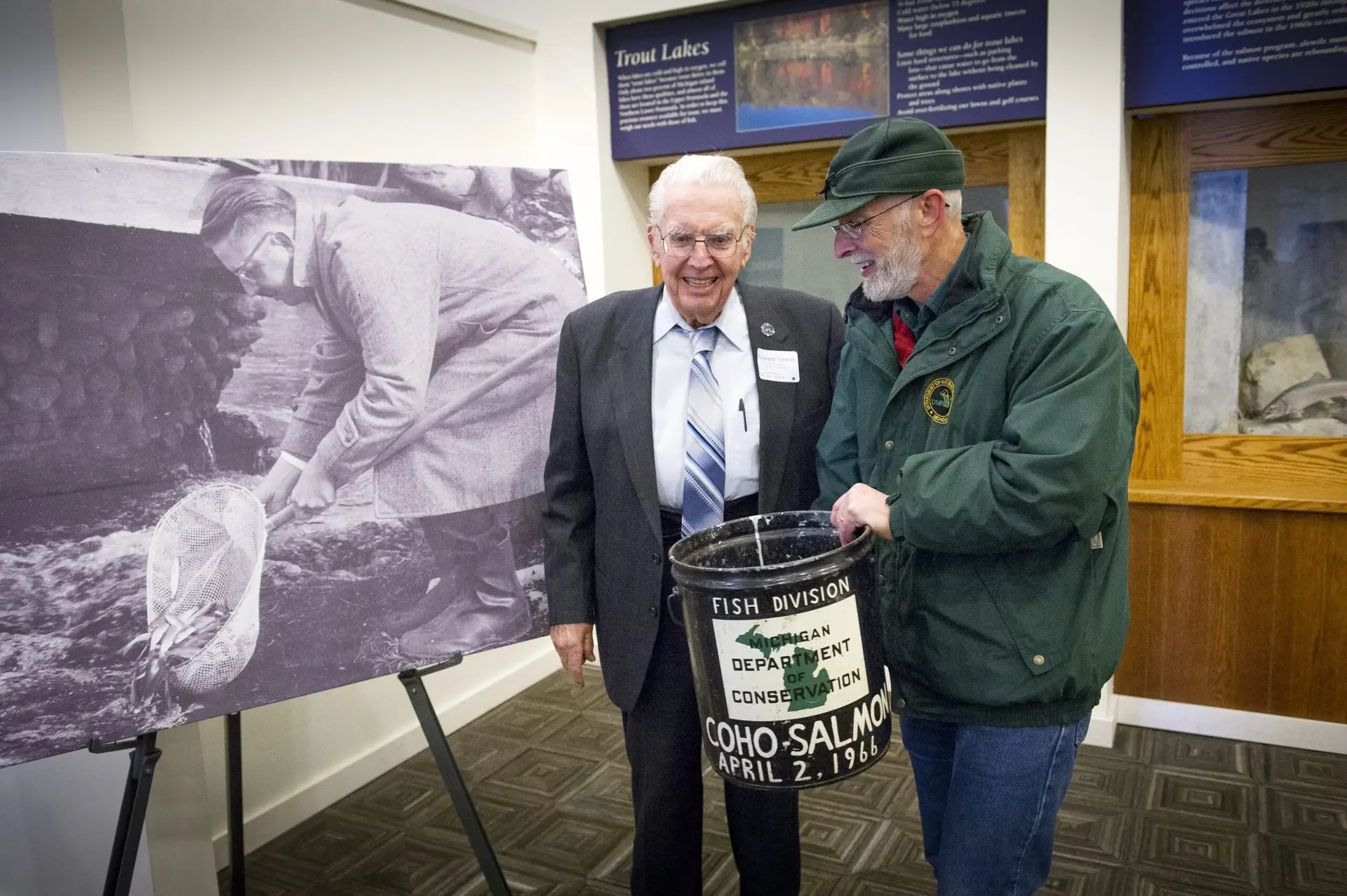
On April 2, 1966, that experiment began. Coho salmon were released into the Platte River in northwest Michigan.
At the time, there was no guarantee of success. Would the fish survive? Would they return to spawn? Would they actually reduce alewife populations? These questions lingered as the first fish entered the water.
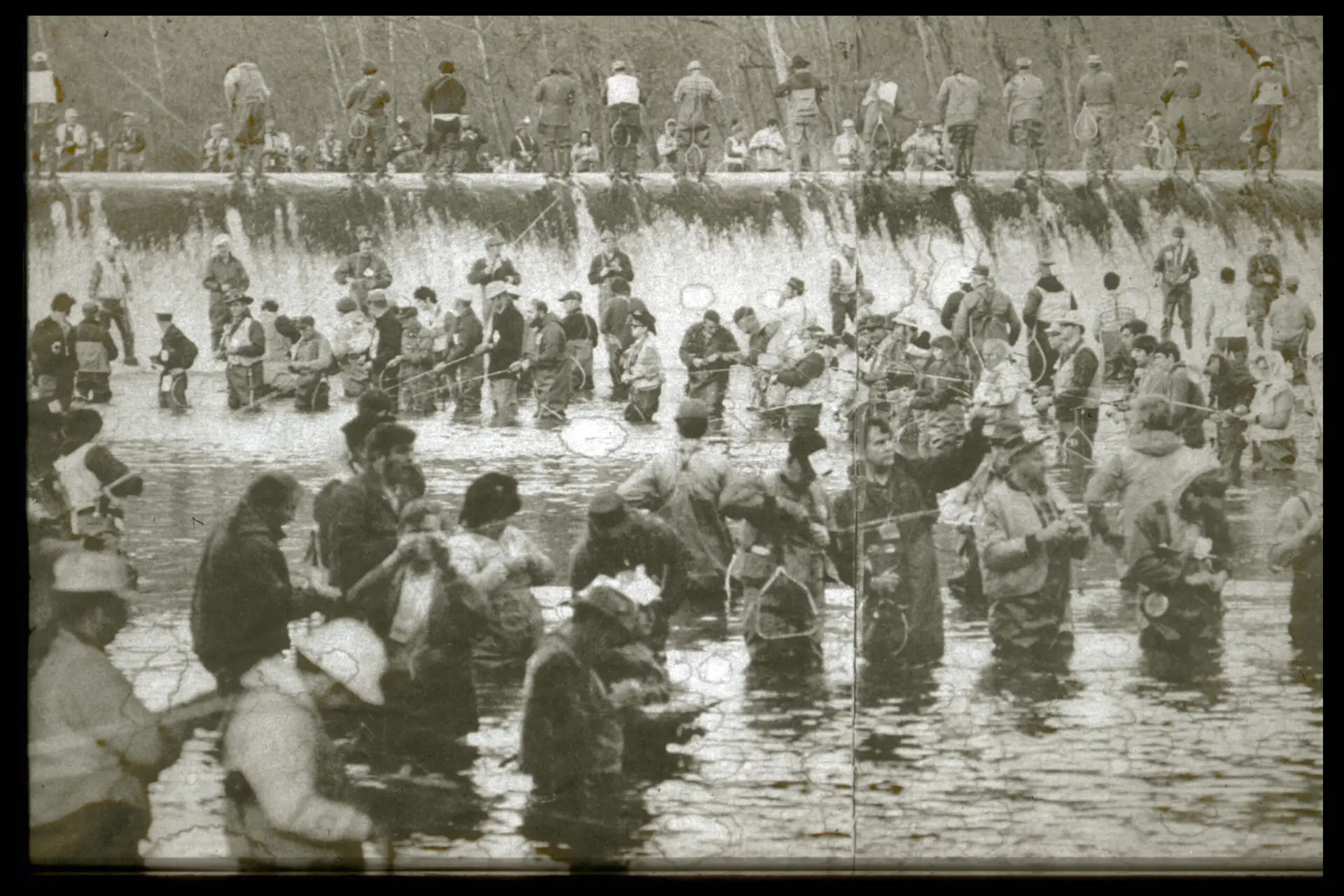
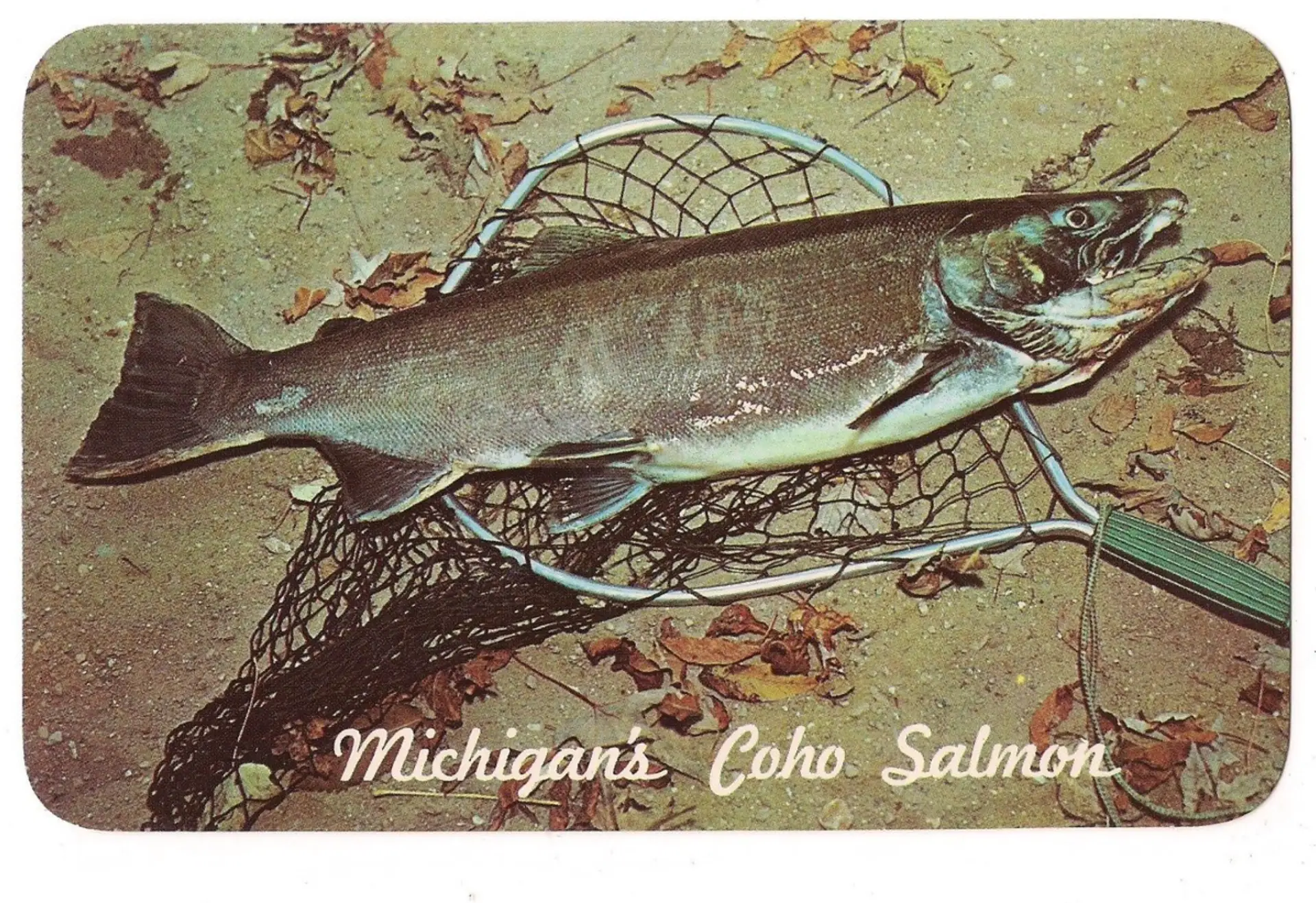
The results came quickly. Within a year, returning salmon appeared in numbers that exceeded expectations. Anglers gathered in large numbers, drawn by the chance to catch a powerful, fast-growing fish. What followed became known as “coho madness,” a surge of interest that transformed the shoreline.
Soon after, Chinook salmon were also introduced, adding another top predator to the system. Together, these species began reshaping the dynamics of the Great Lakes.
From experiment to transformation
The introduction of salmon marked a turning point. As predation increased, alewife populations declined. The massive die-offs that had once plagued beaches became less common. The balance between predator and prey began to stabilize.
At the same time, the social and economic impacts were profound. What began as an ecological strategy became the foundation of a world-class recreational fishery. Coastal communities saw renewed investment. Charter fishing businesses expanded and tourism grew. The Great Lakes were no longer defined by decline, but by opportunity. In the decades that followed, the salmon fishery would become a multi-billion-dollar component of the regional economy.
Tanner’s decision also marked a broader shift in fisheries management. The focus moved from primarily commercial harvest toward recreational use and ecosystem-based management. The effects of that shift are still visible today.
Science continues on the water
The story of the Great Lakes salmon fishery did not end with the first successful stocking. It continues through decades of research, monitoring, and adaptive management.
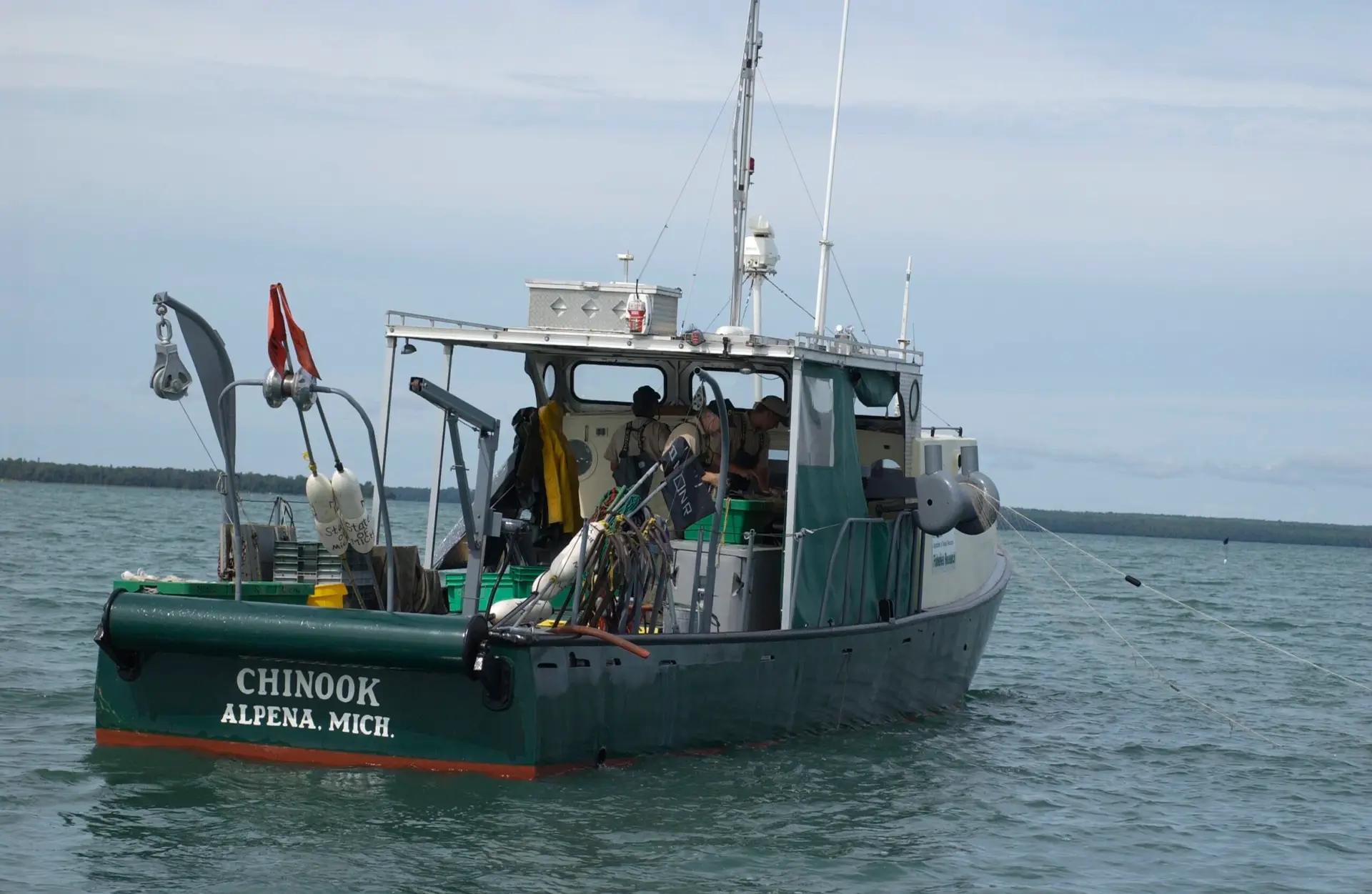
In Alpena, Mich., that work has long been carried out by fisheries scientists at the Department of Natural Resources’ research station. For nearly 70 years, the Research Vessel Chinook served as a platform for studying the lakes. Originally built in 1947 for the Michigan Department of Conservation as Patrol Boat No. 3 and adapted in 1968 for fisheries research, the vessel documented critical changes in the ecosystem, from sea lamprey impacts to the dynamics of salmon and their prey.
Today, the legacy of that work continues aboard Howard Tanner’s namesake, the Research Vessel Tanner. Completed in 2016, it represents a new generation of scientific tools, equipped with hydroacoustic technology, remotely operated vehicles, and sonar systems used to assess fish populations and habitat conditions.
Together, these vessels illustrate an important point. The success of the salmon experiment was not a one-time event. It depends on continuous observation, data collection, and informed decision-making.
Preserving the story
Visitors to the Besser Museum for Northeast Michigan can step aboard the retired Chinook and explore this history firsthand. The vessel now serves as part of a fisheries heritage exhibit, connecting past research to present-day understanding. Here, the story is not just about one species or one decision. It is about a changing ecosystem. Exhibits highlight the rise and fall of fish populations, the control of invasive species, and the role of science in guiding management decisions over time.
For those exploring the Great Lakes Fisheries Heritage Trail, Tanner’s legacy is not confined to a single moment in history. It extends across landscapes, institutions, and communities.
From hatchery to classroom
One of the most powerful ways that Tanner’s legacy lives on today is through both modern fisheries management and education. Across Michigan, state fish hatcheries play a critical role by rearing and stocking millions of salmonids each year, including Chinook and coho salmon, steelhead, and Atlantic salmon. These efforts begin with carefully managed egg take operations, where adult fish returning to rivers are collected, spawned, and their offspring raised in hatcheries before being stocked throughout the Great Lakes. This work is guided by science-based management and coordinated across the basin through partnerships with agencies and the Great Lakes Fishery Commission, ensuring that stocking efforts align with available forage, ecosystem conditions, and long-term sustainability goals.
This same story unfolds on a smaller scale in classrooms across the state. Michigan’s Salmon in the Classroom program brings the Great Lakes fishery directly into schools, where more than 40,000 students each year raise salmon eggs in classroom tanks, observe their development, and release them into local waterways.
In both settings, young fish are carefully raised, monitored, and ultimately released, connecting people to the lifecycle of Great Lakes species and the stewardship required to sustain them. For students, the experience goes beyond observation. They learn how scientists and managers make decisions, how ecosystems function, how human actions shape the health of the lakes and how people use these resources through fishing and other activities.
For educators, Tanner’s story offers a powerful framework for exploring how science, management, and public engagement come together to address complex environmental challenges while preparing the next generation to carry that work forward.
A legacy of stewardship
Stories like Tanner’s offer an opportunity to reflect on innovation and responsibility. The introduction of salmon to the Great Lakes was not simply a fisheries management decision. It was an example of how science, policy, and public need can intersect in transformative ways.
At the same time, Tanner himself, who died at the age of 102 in 2026, acknowledged the risks involved. Introducing a non-native species required careful consideration and ongoing management. It was not a solution without trade-offs. His work reminds us that stewardship is an ongoing process, not a one-time action.
Today, Great Lakes fisheries managers continue to navigate challenges such as changing food webs, climate influences, and new invasive species. The tools have advanced, but the core principles remain the same. Observation, research, and collaboration guide decision-making.
For students raising salmon in a classroom aquarium or visitors standing on a Great Lakes shoreline, Tanner’s story offers more than history. It offers a way of thinking. It asks questions that remain relevant today:
- How do we respond when ecosystems change?
- What role does science play in shaping our decisions?
- How do we balance human needs with environmental health?
These questions are not confined to the past. They are part of the future that today’s youth will help shape.
Howard Tanner could not have predicted every outcome of his decision. But he demonstrated that meaningful change begins with understanding, curiosity, and the willingness to act. From the first salmon released in the Platte River to the classrooms where they are raised each year, his legacy continues to grow. And along the shores of the Great Lakes, where salmon now return with each passing season, the results of that bold experiment remain visible.
Something spectacular did happen.