Fishing for our country
Many industries and communities in the Great Lakes region and globally were impacted from 1939-1945 during World War II. Michigan’s World War II efforts might be best remembered for its industrial might through images of shipyards, and factory assembly lines turning out jeeps, tanks, and aircraft. But another vital wartime industry labored on the freshwater seas of the Great Lakes: commercial fishing.
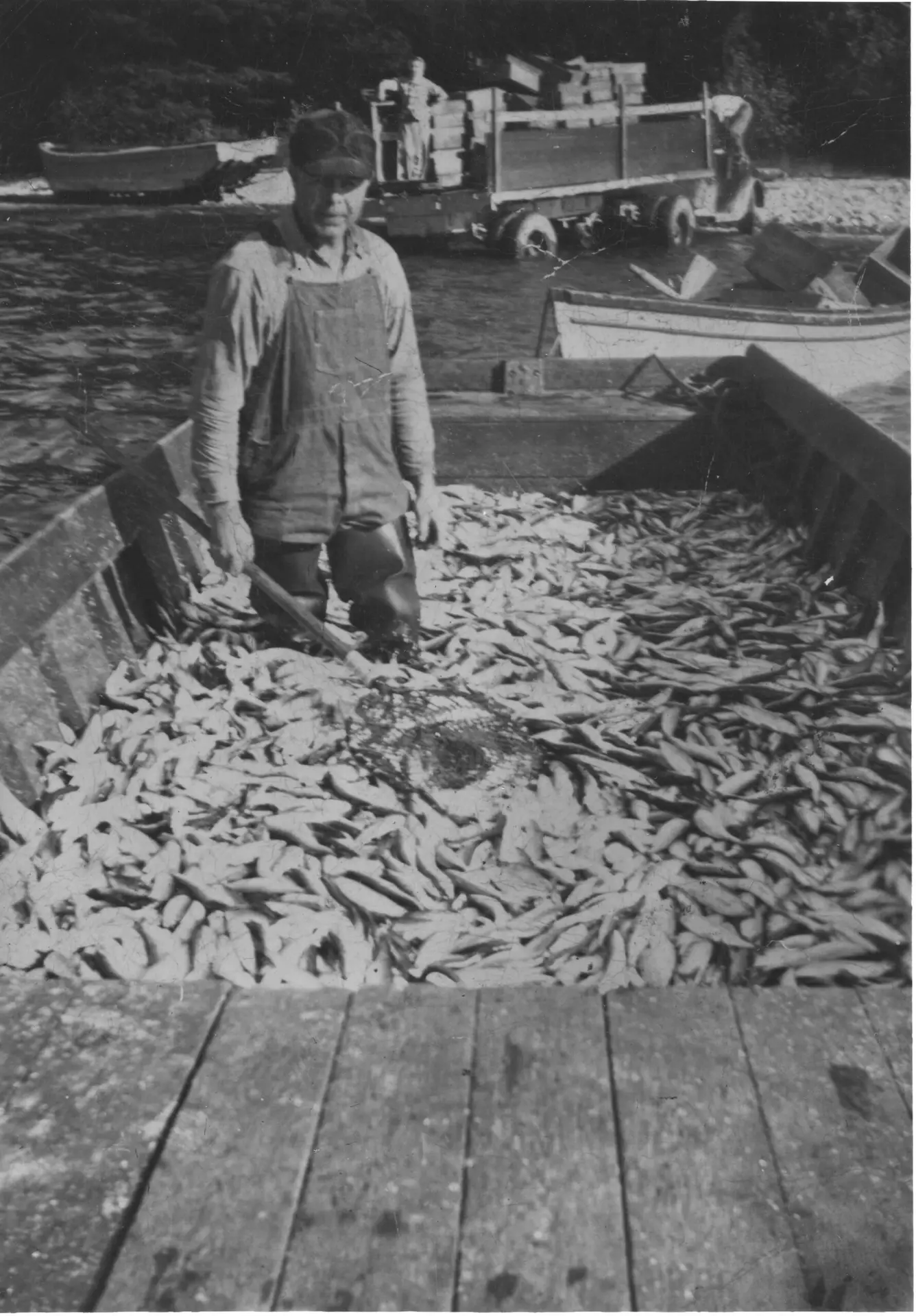
In 1942, a commercial fisherman named John Anderson unloaded his catch on the west shore of Green Bay near Beattie Creek in Menominee County, Michigan. At this time little did Anderson, and all Great Lakes commercial fishermen, know their harvests of cisco (i.e., lake herring), lake whitefish, and lake trout would become part of the nation’s critical food supply chain during wartime mobilization.
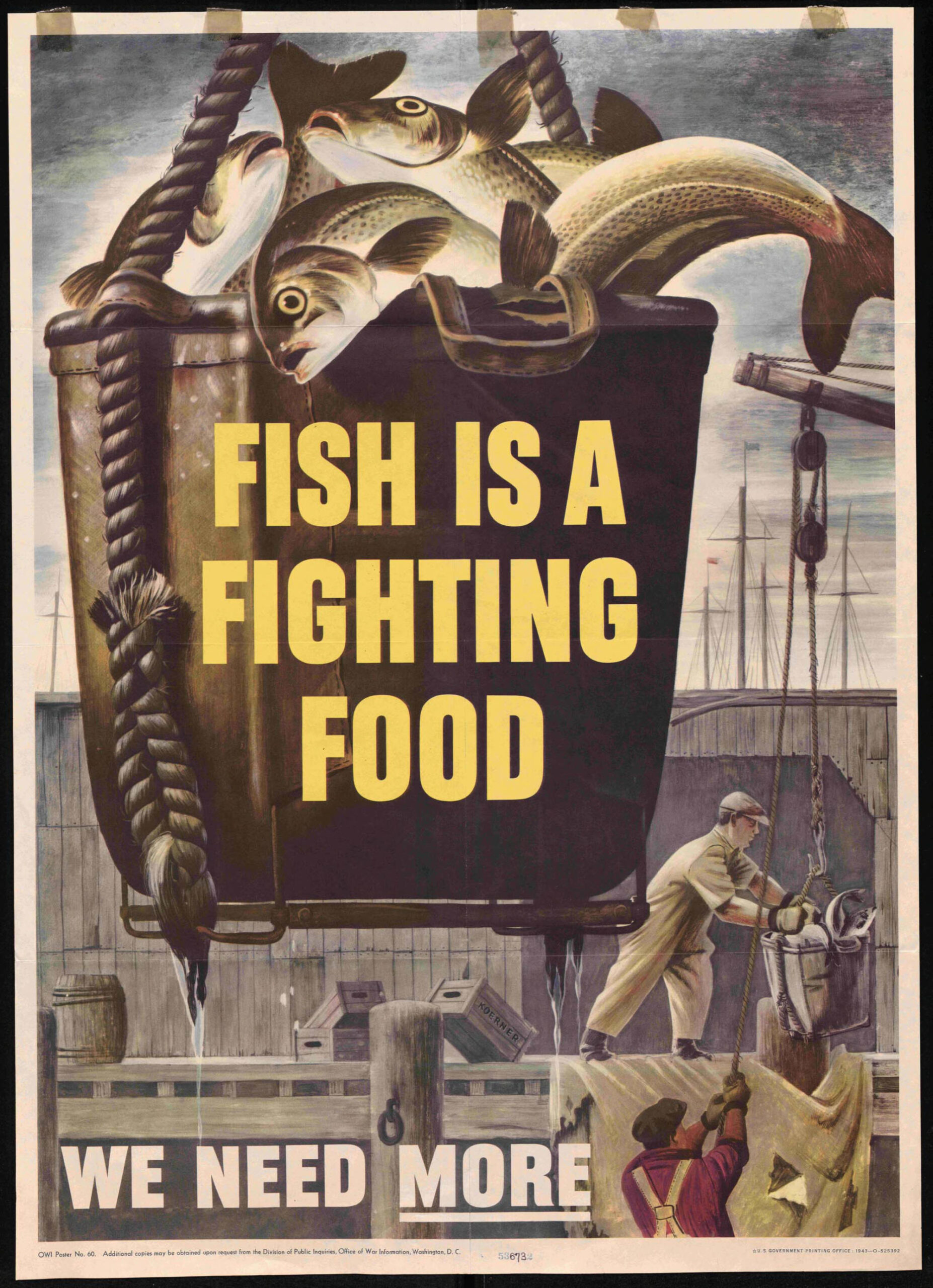
Wartime propaganda captured this effort with a simple message: “Fish Is a Fighting Food.” Much like Victory Gardens, home and community gardens planted during the war to increase the domestic food supply, Great Lakes fisheries helped sustain civilians at home while other agricultural products were shipped overseas to support American troops and Allied nations. In this way, Great Lakes fisheries help illustrate how victory depended not only on weapons and manufacturing, but also on the ability to feed our nation at war.
Across the Great Lakes basin, additional fishing communities answered the same call to duty. Specifically in South Haven on Lake Michigan, a working fleet of gill‑net tugs included the Elsie J, Buddy O, and Butch LaFond, operated by the Jensen, Richter, and Chamber families, respectively. These were only some of the names of the many fishermen who continued harvesting fish throughout the war despite labor shortages, fuel constraints, and dangerous conditions on the water.
As wartime demand for food intensified, the federal government took steps to protect the fishing industry’s workforce. In February 1943, draft deferments, or exemptions, were extended to all commercial fishing crewmen to ensure adequate manpower for this vital food‑production sector. Fishing families such as the Carlson’s, who worked out of Leland, Mich., were officially recognized as essential to the war effort.
Great Lakes at the center of inland commercial fishing
Unlike beef or pork, wild‑caught fish require no grain for feed, could be harvested domestically, and are well suited for both fresh consumption and processing. As a result, Great Lakes commercial fisheries became an increasingly important part of the nation’s wartime food‑production strategy, and the local food supply chain today.
Wartime necessity transformed Great Lakes fishing from a largely regional enterprise into a coordinated food‑production industry. Between 1942-44, the U.S. annually harvested between 74-77 million pounds of fish from waters of all of the Great Lakes states. Michigan’s coastal communities and fishermen contributed around a third of this catch (30-36% of the total U.S. Great Lakes catch) with harvests peaking at 27 million pounds of fish each year.
With more than 3,000 miles of Great Lakes shoreline spanning Lakes Superior, Michigan, Huron, and Erie, Michigan emerged as the nation’s leading inland commercial fishing producer. By the early 1940s, Michigan’s commercial fishing fleet included more than 1,100 licensed boats and approximately 3,000 fishermen working from dozens of ports and harbors across the state.
Cisco, lake whitefish, lake trout and smelt dominated catches, and these species were valued for their high protein content, nutritional value, and access to quantities needed for feeding large civilian populations. The catch was shipped throughout the Midwest and eastern United States, supplying military bases, training camps, hospitals, and civilian markets. Encouraging civilian fish consumption helped conserve rationed meats such as beef and pork for overseas troops. Because Great Lakes fisheries were insulated from enemy naval attacks that threatened coastal shipping waters, the Great Lakes provided a secure and reliable source of protein throughout the war era.
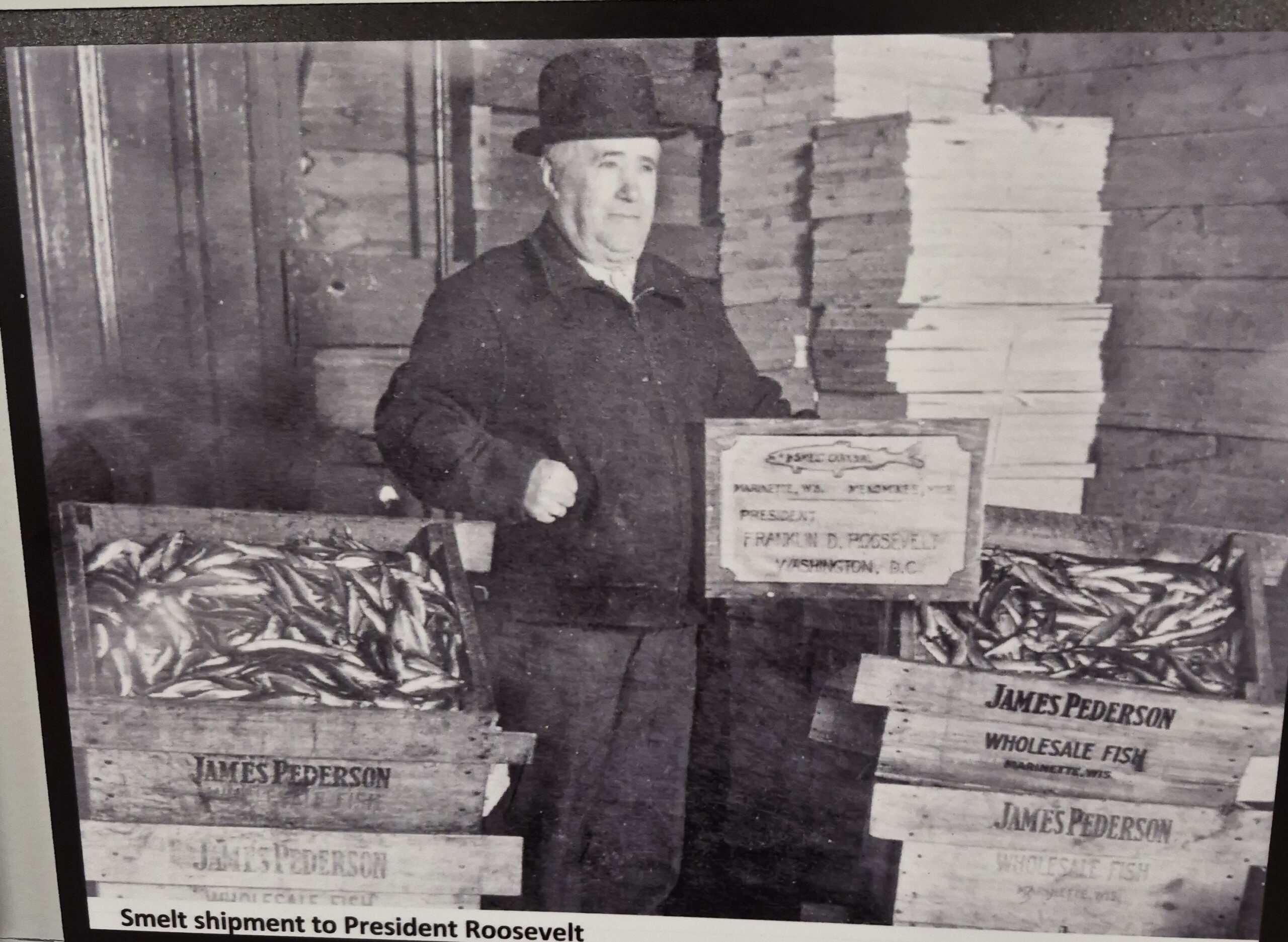
A local newspaper article from 1942 highlights a visit from a Department of the Interior (US Fish and Wildlife Service) representative to the M&M Smelt Carnival to speak with more than 60 commercial fishermen from Menominee, Michigan and Marinette, Wisconsin. The festival, a popular springtime event, celebrated the Menominee River’s abundant smelt runs and drew large crowds from 1934 through the mid-1940s, when it ended due to the war. According to the article, the representative “outlined plans for the federal government to purchase at least 10 million pounds of smelt to be canned at a processing plant in Cleveland, Ohio. The government was depending on the [Menominee & Marinette] area to provide about 1.5 million pounds of the total.”
World War II was fought not only with weapons and machines, but also with calories and protein provided by Great Lakes fish and the people who harvested them as an essential part of that equation.
Deferments & essential workers
Commercial fishing is physically demanding and often dangerous work that continues year‑round. Crews work long hours on small fishing vessels, setting and hauling nets in all seasons, including winter fisheries on the Lakes. Battling ice, wind, and frigid water requires extraordinary endurance, especially as boats age and equipment is stretched to its limits. This labor increasingly fell to experienced, older fishermen as younger men were drawn into military service and threatened labor shortages.
Early in the war, local Selective Service draft boards were given discretion to defer, or exempt, key personnel such as boat masters and engineers, much like the more widely recognized deferments granted to farmers and agricultural workers, to keep fishing operations running. Despite these measures to increase fishing efforts, many fishermen continued to experience catch declines by mid‑1942 from long-term environmental pressures due to invasive species, environmental contaminants, and habitat changes. These compounding challenges led to population declines as much as 75 percent.
Recognizing the industry’s importance, the federal government expanded deferments in February 1943 to include all commercial fishing crewmen. Fishermen were officially recognized as essential to the war effort. By 1944, this designation extended to fish processors and cold‑storage workers, acknowledging that the entire supply chain, not just those on the water, was critical to feeding the nation.
Recognizing the strategic value of commercial fishing, the federal government granted fishermen additional exemptions from gasoline rationing, which was an extraordinary privilege during a period of strict fuel controls. Along with deferments to address labor shortages, these fuel policies made clear that harvesting fish for the war effort could be just as vital to victory as serving in uniform.
Fishing under pressure
By the time the United States entered World War II, Great Lakes fisheries were already under growing strain. Decades of heavy harvest, expanding industrial pollution along the lakeshores, and the recent arrival of the invasive sea lamprey in the late 1930s had begun to reduce native fish populations. Despite drastically declining fish populations, the remaining fish stocks were considered by the government too important to leave in the water. Fish were desperately needed to support the war effort as food, and commercial fishermen were called to action as both federal and state governments expanded commercial fishing activity. In 1942 alone, Michigan issued more than 1,000 commercial fishing licenses.
Fishermen increased their effort, deploying more gear and working longer seasons under increasingly difficult conditions, motivated by the government as a patriotic contribution to the war. At the same time, the push for maximum harvest carried long‑term consequences. Wartime pressure to increase production accelerated overfishing of already stressed fish stocks.
Wartime success & postwar consequences
Although commercial fishing continued after World War II, the industry entered a slow decline in active licenses, shaped in part by wartime pressures. The intensive harvests required to meet wartime food demand accelerated depletion of already stressed fish stocks, while industrial expansion along the Great Lakes shoreline increased pollution and degraded spawning habitat.
These weakened populations were then devastated by the rapidly spreading invasive sea lamprey. By the time effective control measures were developed and implemented, many native fish species had been severely reduced by sea lamprey. Within roughly a quarter century of the war’s end, large‑scale commercial fishing on the Upper Great Lakes had largely disappeared.
The scale of sea lamprey impacts prompted the creation of the Great Lakes Fishery Commission. Unlike their coastal counterparts, the Great Lakes waters are not federally regulated waters. Therefore, the Great Lakes fisheries are managed cooperatively by state and Tribal agencies via the Great Lakes Fisheries Commission (GLFC), which helps facilitate cooperative ecosystem management among two countries, six states, and multiple Tribal Nations. Management priorities shifted to include efforts such as the restoration and stocking of native lake trout and the introduction of Pacific salmon species. Together, these actions reshaped Great Lakes fisheries from once was deemed by the U.S. government as a critical food source to how we know them today with the shifting to a popular, and primarily, recreational fishing sector.
The Great Lakes region contains more than 20 percent of the world’s surface freshwater and supports a culturally, economically, and ecologically significant fisheries sector. Yet the dual identity of fisheries, as both food and a managed natural resource, creates a complex landscape for prioritizing the various values people have for fish. These values shape the structure, governance, and declining performance of the Great Lakes commercial fisheries as they operate today. What once was a Michigan industry with over 1,000 active licenses harvesting more than 26 million pounds of fish annually during the war is now 178 active licenses harvesting 4 million pounds of fish for food. On the other hand, the Great Lakes recreational fisheries now contributes over 4 billion dollars to the regional economy.
This article is based on research by The Michigan Maritime Museum in South Haven for their previous exhibit Lake Michigan’s Call to Duty and local histories collected by the West Shore Fishing Museum in Menominee. These resources place commercial fishers alongside farmers and factory workers in the story of wartime mobilization, underscoring a central truth of World War II: food production was as critical to victory as arms manufacturing.