Step inside the Great Lakes Fisheries Heritage Exhibit at the Besser Museum for Northeast Michigan, and the story of Lake Huron unfolds not as a single timeline, but as an immersive experience.
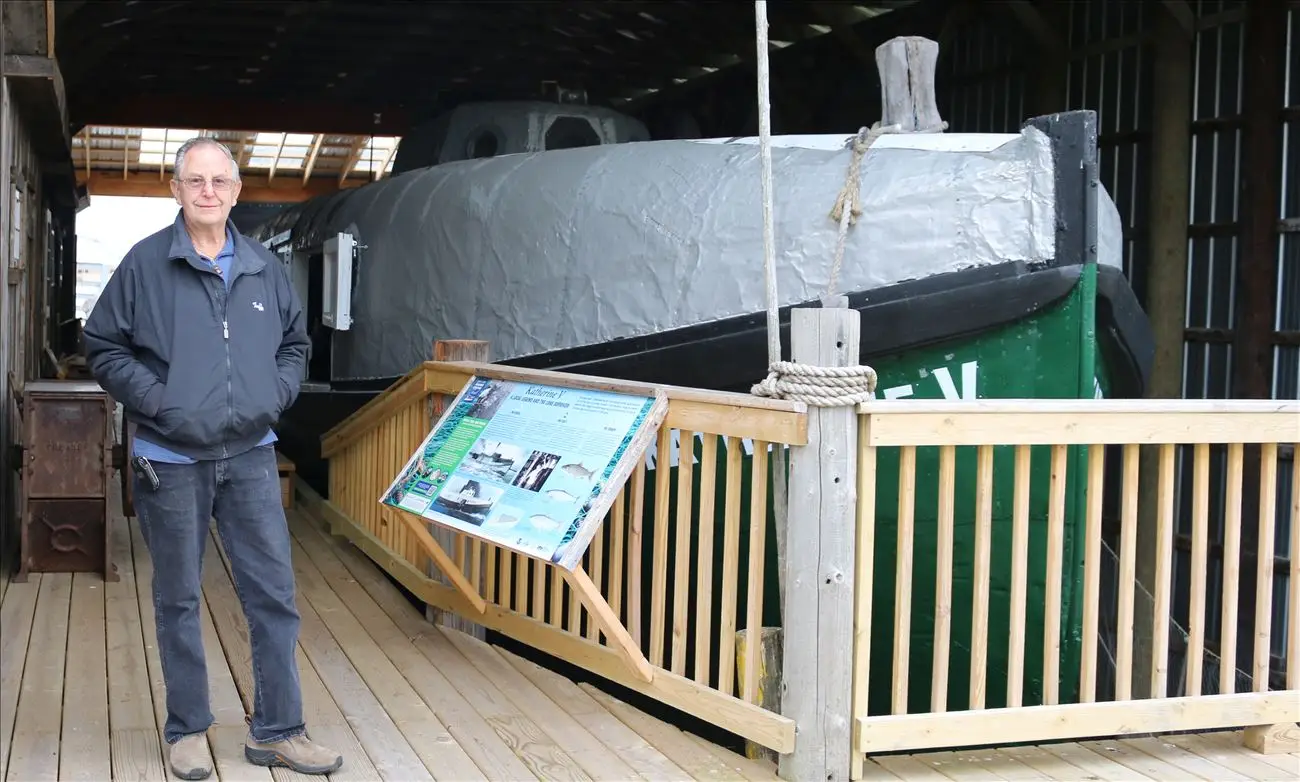
The Katherine V exhibit captures a working commercial fishing vessel at a moment in time. Walking along the docks, visitors can imagine themselves in the world of Lake Huron’s commercial fishery, experience the activity of a bustling harbor as fishermen prepare their gear, retrieve fishing nets, or return to port with their catch. Nearby, the R/V Chinook outfitted with the science and research equipment once deployed from this research vessel speaks to a different kind of work on the water.
This is a story of Lake Huron fisheries and the coastal communities who have depended on these waters for centuries. It is also a story told through the voices of those who experienced these Lake Huron fisheries and the changes they have seen firsthand.
One of those voices belongs to Clarence “Tuffy” Cross, a fifth-generation commercial fisherman who has known the lake through cold mornings, heavy nets, and the rhythms of a working harbor. Cross would later serve as captain aboard the R/V Chinook, a Michigan Department of Natural Resources (MDNR) Fisheries Division research vessel. There, his experience on the water intersected with science, working alongside fisheries biologist Jim Johnson.
Johnson spent decades studying Lake Huron, translating observation into science and science into stewardship. His work examining food web changes, driven in part by invasive species, is reflected in the documentary Lake Invaders: The Fight for Lake Huron, which follows Johnson, Cross, and their team aboard the Chinook as they work to understand a changing ecosystem.
Together, their lives bridge the very story this exhibit tells. Cross came up through a fishing family lineage dating back to the mid-1800s, beginning as a boy selling fish on the dock and later hauling nets as a deckhand. Johnson came to know the lake through research, leading the Alpena Fisheries Research Station and dedicating more than 25 years to understanding Lake Huron’s fish community and its recovery.
Both men would later serve on the Besser Museum’s board and play key roles in bringing this exhibit to life: restoring vessels, shaping interpretation, and ensuring that the story of Lake Huron fisheries is told not just through artifacts, but through lived experience.
Lake Huron’s story is not simply one of rise or decline. It is a story of the relationship between people and place that has adapted over time in response to both opportunity and challenge.
A relationship rooted in the water
Long before commercial markets, world-class recreational fishing, or research vessels defined Lake Huron, Indigenous communities lived in close relationship with its waters. Fishing was part of a broader system of knowledge shaped by seasonal patterns, ecological understanding, and deep connections to the Great Lakes waterways. These relationships remind us that fisheries are not just economic systems, they are cultural systems grounded in stewardship and personal connections with the Great Lakes.
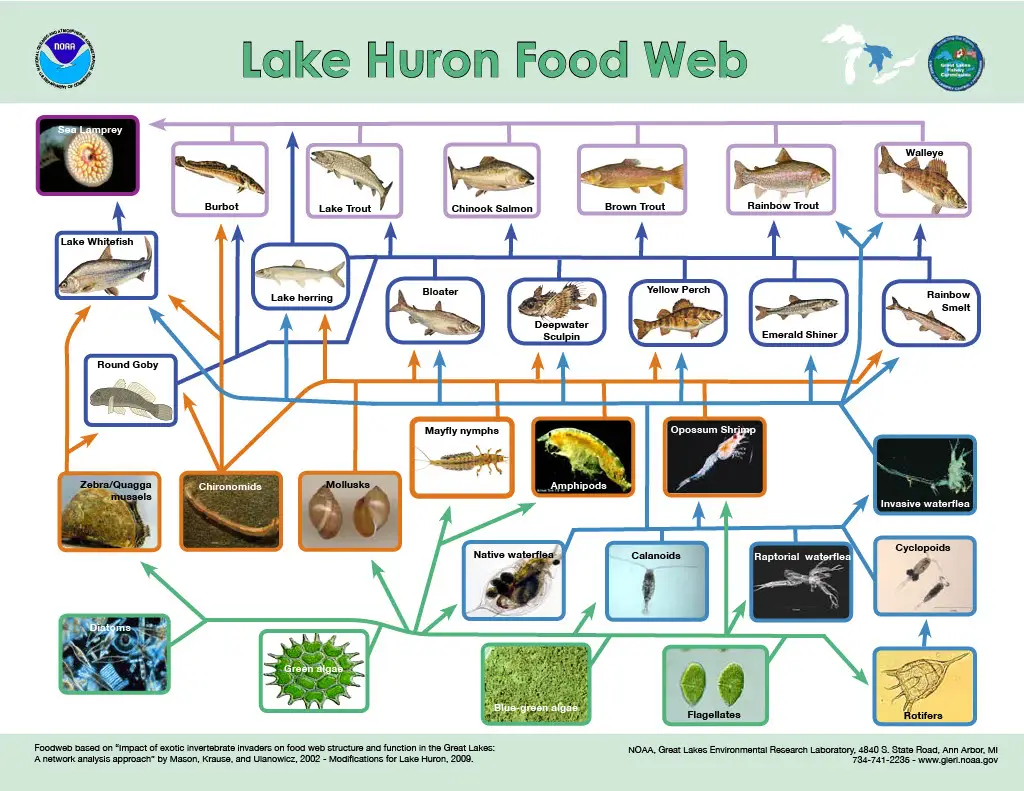
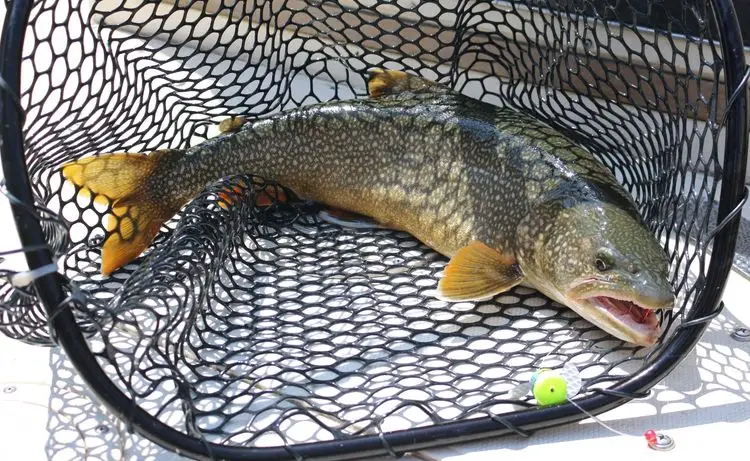
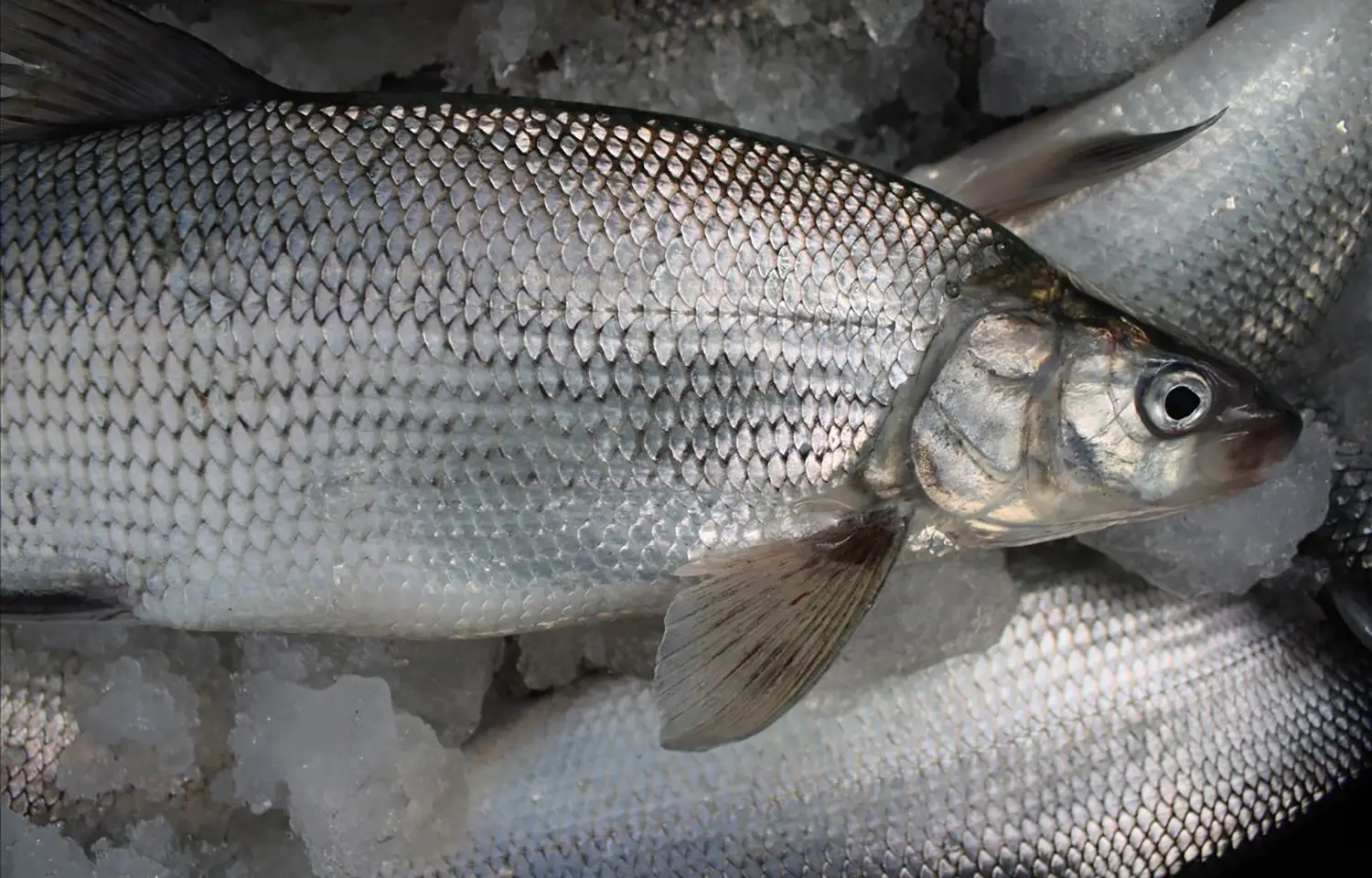
At the Besser Museum, the Native American exhibit and fish diversity displays help anchor that understanding. Lake trout, whitefish, lake sturgeon, and ciscoes once formed a complex web of life that supported both ecosystems and communities. Tribal Nations fished and benefited from a diversity of native fishes seasonally and across Michigan’s waterways, as they continue to do today exercising treaty-protected fishing rights.
Building a fishery and a way of life
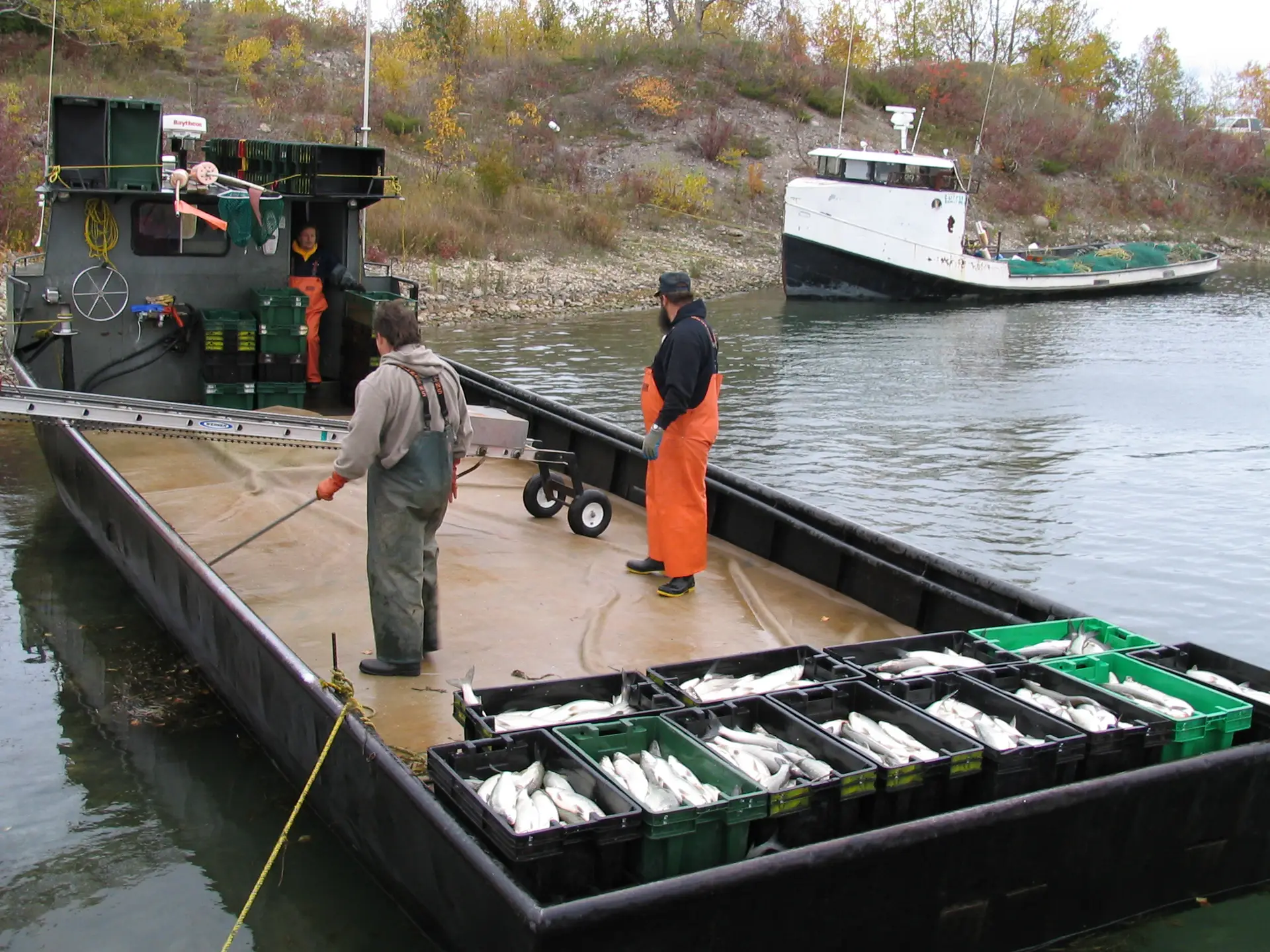
By the late nineteenth century, and as cultures from across the world came together in the Great Lakes region, fishing on Lake Huron eventually expanded into a full-scale commercial enterprise. Harbors like Alpena became hubs of activity, and families such as the Cross family built their livelihoods around the rhythms of the lake.
For Tuffy Cross, that life began early. As a teenager, he worked along the docks before joining crews on the water, learning firsthand what it meant to make a living from Lake Huron. Fishing was demanding, nights often began at midnight, and days stretched ten to twelve hours, but it was also grounded in skill, tradition, and community.
The Katherine V, now preserved at the Besser Museum, represents that era. Built in 1928 and fished for decades in northern Lake Huron, she stands as one of the last surviving wooden “turtle back” gill net tugs and a symbol of the once-dominant commercial fleet.
Walking alongside it, visitors can imagine crews hauling nets heavy with fish, working in all weather, guided by experience and instinct. Within the exhibit, gill nets made by Tuffy Cross tell a story of change by literally tying the historical progression from cotton to synthetic netting and wooden to metal and plastic floats. Reflected in these hand-made nets are also the net-making and mending skills and traditions passed down through generations.
Boats like the Katherine V, and the people who worked them, formed the backbone of an industry that defined coastal communities built on knowledge, craftsmanship, and resilience.
When the system changed
By the mid-twentieth century, that system began to shift. Native fish populations, especially lake trout, declined under pressure from overharvest, habitat changes, and invasive species like the sea lamprey.
Lake Huron’s fishery changed dramatically with the invasions of sea lamprey and alewife. Lake trout, whitefish and cisco populations in the Great Lakes plummeted as a result of sea lamprey-induced mortality, and alewife and rainbow smelt populations increased without predators and competition from other native fish.
For those on the water, the effects were immediate. Commercial fishing became more difficult and, in some cases, unsustainable. Cross witnessed this firsthand, eventually leaving commercial fishing as the industry contracted.
For Jim Johnson, this period defined the trajectory of his career. Working out of Alpena, he helped document the collapse and began asking critical questions about how the lake functioned—and how it might recover. Observations of heavily sea lamprey-scarred fish underscored just how complex and fragile the system had become.
This period marked a turning point. Lake Huron was no longer viewed as an inexhaustible resource, but as a system under stress and one that required new knowledge, collaboration, and management approaches.
Learning from the lake
That shift is embodied in the R/V Chinook, now displayed alongside the Katherine V. Where one represents harvest, the other represents inquiry.
Originally built in 1947 to serve the Conservation Department (later to become the Department of Natural Resources), it served the Law Enforcement Division as Patrol Boat #3. Later converted into a fisheries research vessel, the Chinook spent decades documenting Lake Huron’s changing ecosystem, serving as a research platform that allowed scientists to monitor fish populations, evaluate the impacts of invasive species, and measure how fish communities responded to management actions such as stocking, harvest regulations, and sea lamprey control efforts.
Cross’s career came full circle aboard this vessel. After years in commercial fishing, he spent more than three decades working on the Chinook, contributing to research efforts that helped define modern fisheries management.
Johnson’s work was deeply connected to the data gathered aboard the vessel. As a research biologist, he helped translate those observations into a broader understanding of Lake Huron’s food web, population dynamics, and restoration potential.
Together, their experiences represent a broader transition—from a relationship defined primarily by harvest to one informed by science. Knowledge built from lived experience, and knowledge built from research began to converge, reshaping how the lake was understood.
Adapting in uncertain times
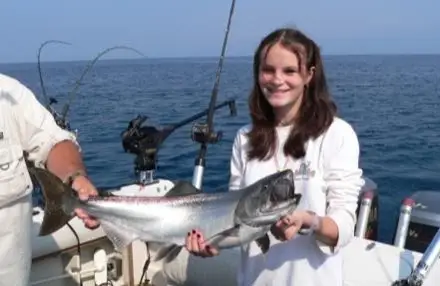
Faced with collapsing native fish populations and massive alewife die-offs washing onto Great Lakes beaches peaking in the early 1960s, fisheries managers searched for solutions to restore balance to the ecosystem. One of the most significant was the stocking of Pacific salmon. Chinook salmon quickly became established, feeding on abundant alewives and helping reduce their numbers. At the same time, they created a world-class recreational fishery that attracted anglers from across the region, fueled the growth of charter fishing businesses, and generated new economic opportunities for Lake Huron’s coastal communities.
The new salmon population helped manage invasive alewife populations while fueling a growing recreational fishing industry. The success of the salmon fishery coincided with broader efforts to restore native species, particularly lake trout and walleye. Lake Huron is now considered a world-class walleye fishery. Efforts to restore native lake trout prompted changes in fisheries management, including a gradual shift away from gill nets toward trap nets that were viewed as more compatible with rebuilding native fish populations. Trap nets also allowed for more selective harvest of target species while reducing gear conflicts with recreational anglers. These changes reshaped commercial fishing practices and reflected the increasing complexity of balancing harvest, restoration, and diverse economic, cultural and recreational values tied to the fishery.
However, the rise of recreational fishing was not necessarily the end of Lake Huron’s commercial fishery. In fact, commercial whitefish harvests and profits reached historic highs during much of this period. In 2008, Lake Huron supported the largest lake whitefish fishery in the Great Lakes, accounting for nearly half of the total lake whitefish harvest across all Great Lakes waters. Together, these fisheries reflect the many ways people value and participate in the Lake Huron fishery—whether as a source of livelihood, recreation, food, cultural identity, or connection to place—and demonstrate how thoughtful management has allowed those values to coexist in environmentally sustainable ways.
More recently, however, Tribal, commercial and recreational fisheries have been shaped by profound food web changes driven by invasive mussels. By filtering plankton from the water and redirecting nutrients to the lake bottom, mussels contributed to the collapse of alewife populations and the subsequent decline of Lake Huron’s once-thriving Chinook salmon fishery in the early 2000s. At the same time, reduced plankton abundance limited food available to newly hatched lake whitefish (called fry). These changes have reduced the survival of young fish, leaving fewer fish to replenish populations and support future harvests in some areas and raising concerns about the future of one of Lake Huron’s most important commercial fisheries.
Johnson’s work helped scientists better understand the complexity of a changing Lake Huron, where the decline, recovery, or introduction of one species could reshape opportunities and challenges for many others.
Complexity beneath the surface
One of the greatest fisheries restoration successes in the Great Lakes is the control of invasive sea lamprey populations. Combined with decades of stocking and restoration efforts, improved lamprey control helped rebuild lake trout populations across portions of Lake Huron. As efforts to restore lake trout gained momentum, researchers encountered an unexpected problem. Thiamine deficiency, linked to diets rich in invasive alewives, reduced the survival of eggs and newly hatched fry, limiting the ability of lake trout to naturally reproduce and sustain their recovery.
The discovery revealed how deeply interconnected the Lake Huron ecosystem had become. The recovery of a native predator could be influenced by changes occurring elsewhere in the food web influencing fish health, reproduction, and population recovery. Unexpected challenges like thiamine deficiency in lake trout underscored that restoring native fisheries involved more than rebuilding fish populations. It required understanding the complex relationships among predators, prey, invasive species, and the broader ecosystem that supported them.
Johnson spent much of his career exploring these kinds of questions to learn how species interact, how ecosystems shift, and how management strategies might adapt. His work spanned everything from lake trout recovery to Chinook salmon dynamics and broader food web changes.
The Chinook itself collected data during some of the most dynamic periods in Lake Huron’s history, documenting the collapse of certain fish populations, the recovery of others, and the ongoing influence of invasive species.
One of the most striking examples occurred between 2000 and 2006, when researchers aboard the R/V Chinook documented the rapid collapse of alewife populations in Lake Huron. The effects rippled throughout the ecosystem. Chinook salmon, which had become heavily dependent on alewives as prey, experienced a dramatic decline. At the same time, lake trout reproduction improved as their diet shifted away from alewives, a source of thiamin deficiency that had limited reproductive success. Walleye also benefited, as the collapse of alewife populations reduced predation on newly hatched walleye fry, contributing to a remarkable resurgence of walleye in Saginaw Bay and elsewhere in Lake Huron.
This same food web change event that upended one fishery helped create opportunities for others, demonstrating the complexity and resilience of Lake Huron’s evolving ecosystem. At the Besser Museum, these scientific stories are not abstract. They are tied directly to the vessels, tools, and people who experienced them.
New invaders, new change and decline of salmon
In the late 1980s, zebra mussels, and later quagga mussels, arrived in the Great Lakes, carried in the ballast water of ocean-going ships. These invasive species quickly spread throughout Lake Huron and beyond. As filter feeders, they remove plankton and particles from the water, making the lake appear clearer while shifting nutrients to the lake bottom. This change has fueled the growth of nuisance algae, including mats that wash ashore and create foul-smelling beach conditions.
The loss of plankton has had far-reaching effects on the food web. Small forage fish that depend on plankton declined sharply, disrupting the balance of the entire ecosystem. By the early 2000s, these changes contributed to a collapse in key prey fish populations, which in turn affected salmon and other predators. Chinook salmon, once abundant, peaked in the early 2000s before declining rapidly as their food supply dwindled. Reduced stocking, changing lake conditions, and an overtaxed food web marked a dramatic shift in Lake Huron’s fishery.
Today’s fishery – diversity, resilience and native species rebound
Despite decades of ecological disruption, Lake Huron’s fishery today reflects a measure of resilience and renewal. Native species have begun to rebound in ways that were once uncertain. Lake trout populations are recovering in parts of the lake, while Saginaw Bay has experienced strong returns of walleye. Nearshore species such as smallmouth bass have also increased, supported in part by ongoing investments in habitat restoration, including spawning reef projects and broader efforts to restore species like lake sturgeon.
Since the collapse of the Chinook salmon fishery in the early 2000s, shifts within the food web have created new opportunities for native fish. With alewife populations greatly reduced, predation on newly hatched walleye declined dramatically, allowing walleye populations in Saginaw Bay to recover and reach levels not seen in nearly a century. Other species, including emerald shiners, have expanded in open waters, and improvements in lake trout reproduction have been notable, with more than half of the population now naturally produced. Many native fish have also adapted to changing conditions, incorporating non-native prey such as round gobies and invasive mussels into their diets.
Fisheries managers have also adapted stocking strategies for open water fish species expanding Atlantic salmon, steelhead (rainbow trout) and coho salmon based on a Lake Huron predator diet study that revealed these species’ diverse diets allowed them to thrive in the again shifting Lake Huron food web. For Lake Huron, environmental benefits of natural reproduction of native species and stocking for biodiversity in salmonid predators has offered opportunity for Lake Huron recreational anglers. Today, Lake Huron reflects more than half of the total angler effort (hours fished) and catch of fish across all Michigan Great Lakes waters, based on Michigan Department of Natural Resources creel survey science.
These changes are not a full return to past conditions, but they highlight the value of long-term, science-based management and collaboration. Agencies, Tribal Nations, researchers, and fishing communities have worked together to guide the fishery through a period of profound transition.
A changing lake, a living heritage
Lake Huron continues to evolve. Invasive species, habitat change, and shifting food webs ensure that change remains constant. Today’s Lake Huron fishing landscape is dramatically different than it was even 50 years ago.
Commercial fishing remains part of Lake Huron’s identity, though at a reduced scale. Fishing families continue to adapt to changing ecosystems, reduced whitefish harvest opportunities, and shifting social and economic realities, demonstrating the same resilience and ingenuity that have sustained Great Lakes fisheries for generations. Tribal nations continue to harvest fish under treaty-protected rights, reflecting both historical connections to the Great Lakes and ongoing roles in fisheries management and conservation.
Recreational fisheries, too, have adapted to shifting food webs and changing fish populations and remain a defining and thriving part of the Lake Huron experience. Charter captains, anglers, and coastal communities now engage with the lake in ways that emphasize experience, stewardship, and connection.
The careers of Jim Johnson and Tuffy Cross illustrate what it means to adapt within that change. One began as a fisherman and became a steward through preservation and education. The other built a career in science aimed at understanding and guiding the lake’s future.
For researchers like Johnson, the story is not only one of disruption, but of progress toward a more balanced and sustainable relationship with Lake Huron.
For Cross, preserving and sharing that history became part of his legacy. His historical research and the books he has written help ensure that the knowledge and stories of commercial fishing communities will not be lost. His volunteer work and leadership at the Besser Museum have helped engage and immerse schools and youth, tourists and local community members alike in the stories of those who made their living on the lake.
It is no coincidence that Cross helped lead the restoration of the Katherine V, while Johnson guided interpretation of the Chinook. Today, at the Great Lakes Fisheries Heritage Exhibit the Katherine V and R/V Chinook sit side by side, telling two parts of the same story about Great Lakes fish harvest and fisheries science from our past, which shapes our present day fishery and as we look to the future.